
Ingredients
Equipment
Method
- Heat 2 tablespoons of neutral oil in a heavy skillet over medium-high heat until shimmering. Add the chopped kimchi in a single layer and leave it undisturbed for 60 seconds.
- Cook the kimchi for 4 to 5 minutes, stirring every 30 seconds. When the oil changes from yellow to deep terracotta orange, the kimchi is ready.
- Add the kimchi juice and the gochujang, if using. Cook for 30 seconds, until glossy.
- Break the cold rice apart with your hands and add it to the skillet. Drizzle the soy sauce over the rice while stirring. Cook for about 2 minutes, until every grain is coated orange-brown.
- Press the rice flat against the bottom of the skillet. Reduce the heat to medium and leave it undisturbed for 90 seconds to create the crispy nurungji bottom.
- Push the rice to one side. Add 1 teaspoon of neutral oil to the empty space and heat for 20 seconds. Crack in one egg. Cover for 30 to 45 seconds, until the white is set and the yolk remains runny. Repeat with the second egg.
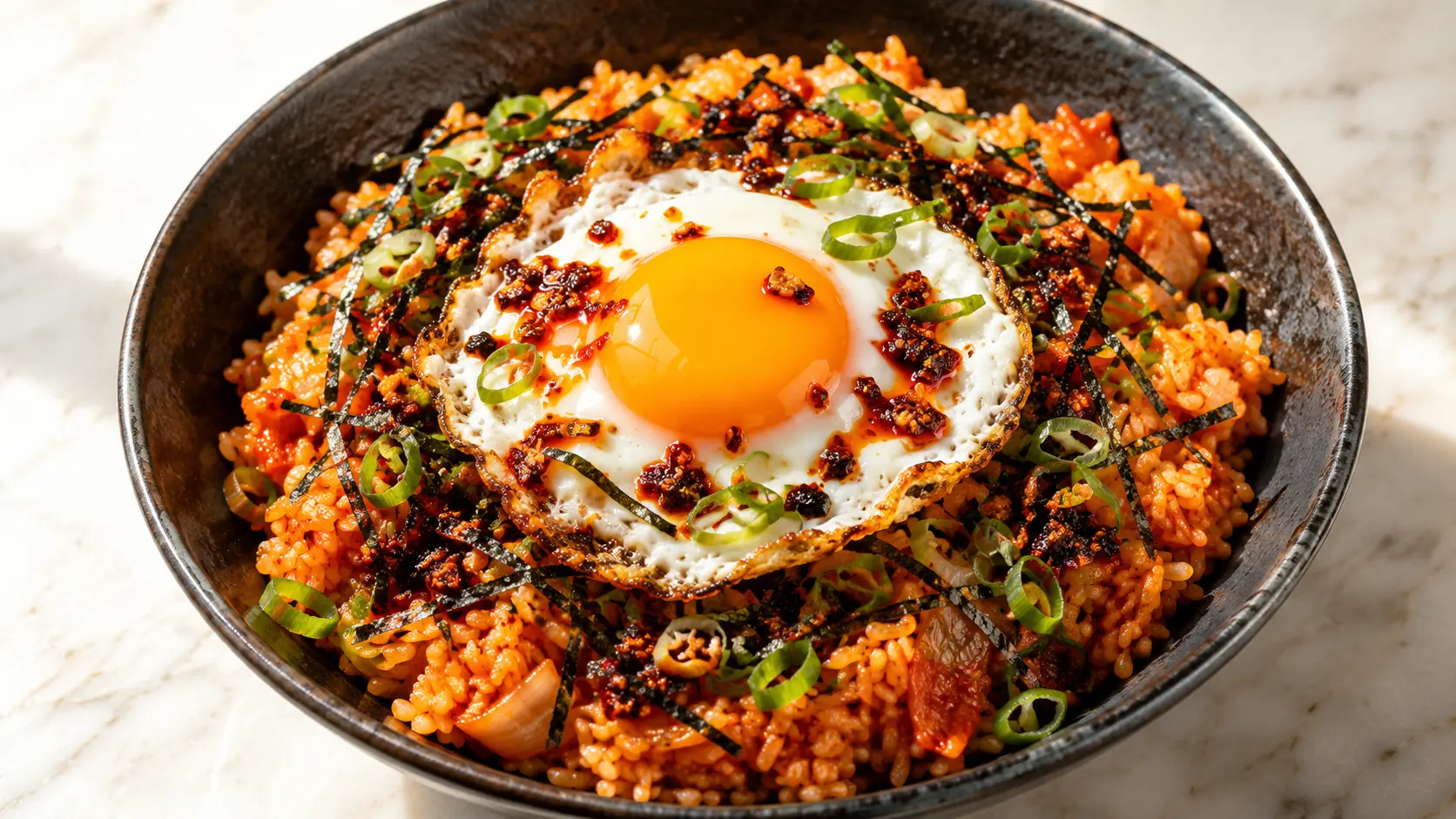
- Turn off the heat. Drizzle the toasted sesame oil over the rice. Divide the rice between two bowls and top each serving with an egg, sliced scallions, torn seaweed, and chili crisp.
Notes
Aged kimchi gives the deepest flavor, but keep commercial kimchi refrigerated and follow the storage directions on its label. If your kimchi is fresh, cook it for one extra minute and add 1 teaspoon of gochujang plus 1/2 teaspoon of rice vinegar with the kimchi juice.
Cold day-old rice fries more evenly than freshly cooked rice. Refrigerate cooked rice within 2 hours; if you need to cool fresh rice for this recipe, spread it in a shallow layer and chill it promptly.
The kimchi is caramelized enough when the oil in the skillet turns deep orange-brown. This orange oil is the flavor base for the entire dish.
Refrigerate leftovers within 2 hours. Store the fried rice without the eggs and cook the eggs fresh when serving.
Use pasteurized eggs for a safer runny yolk, or cook the yolks completely.