
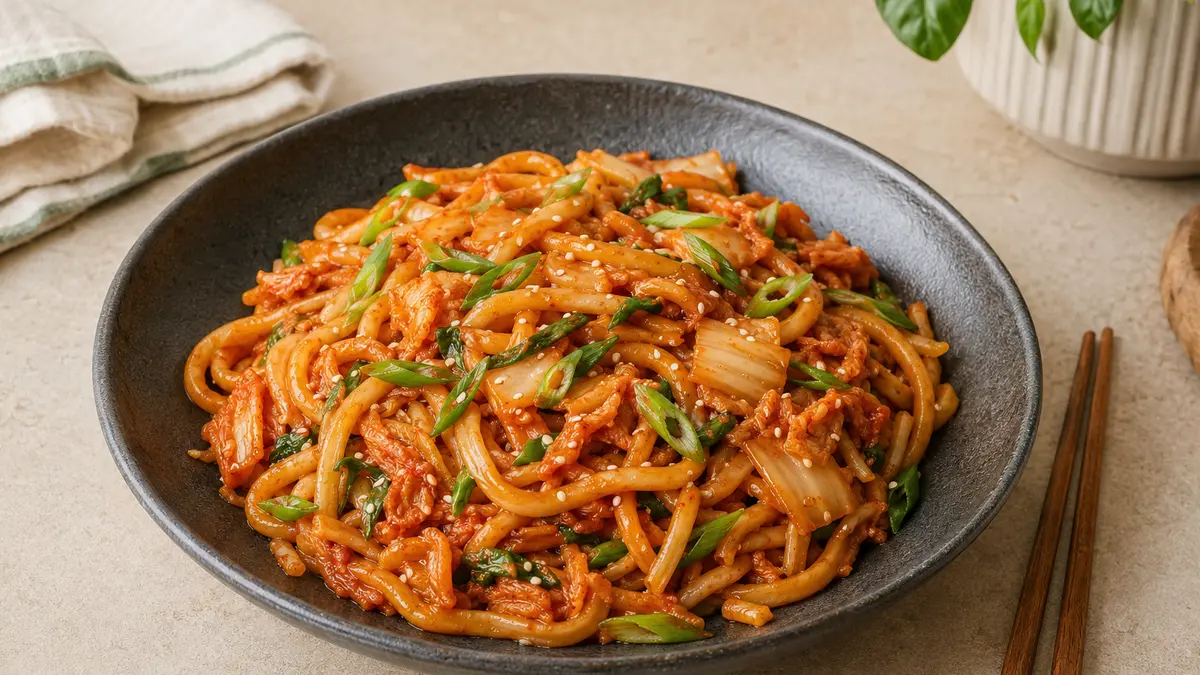
Kimchi udon stir fry can turn watery in two places: inside the noodle package and inside the kimchi jar. Put both straight into a skillet and the sauce has to fight a puddle before it can coat anything.
The practical fix is simple. Drain the noodles well, cook the kimchi until the loose liquid evaporates, and add only enough water to help the gochujang sauce move around the pan. The finished noodles should be coated, not swimming.
Before the pan gets hot: control the water
Fresh, frozen, and vacuum-packed udon do not behave exactly the same way. Follow the package directions only until the strands separate, then drain them thoroughly. They will finish heating in the sauce, so fully softening them first makes breakage more likely.
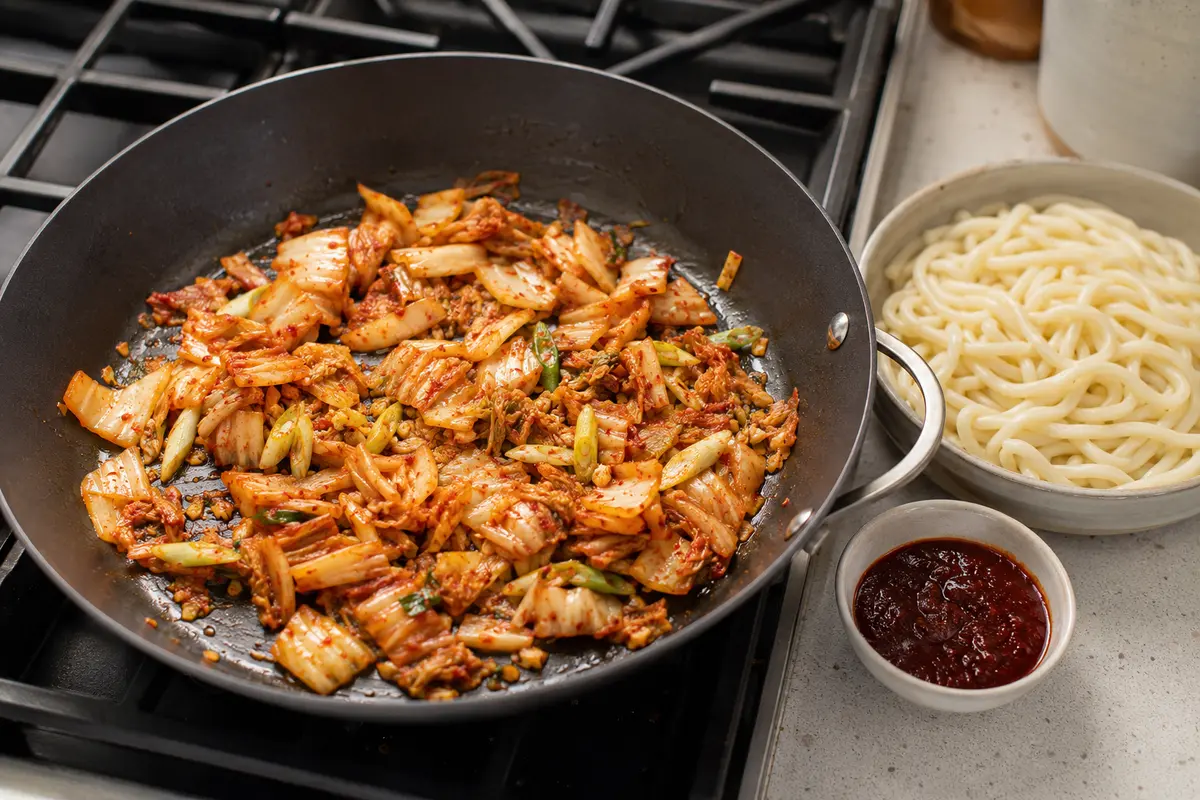
Kimchi needs the opposite treatment: give it a few minutes in the skillet before the sauce goes in. When the cabbage stops leaving a watery trail across the pan, it is ready for the noodles. This step also makes the amount of kimchi liquid in the jar less important.
Use well-fermented kimchi if you have it, but do not leave kimchi at room temperature to force faster fermentation. Keep it refrigerated and use the liquid already in the jar to season the sauce.
What goes into this kimchi udon
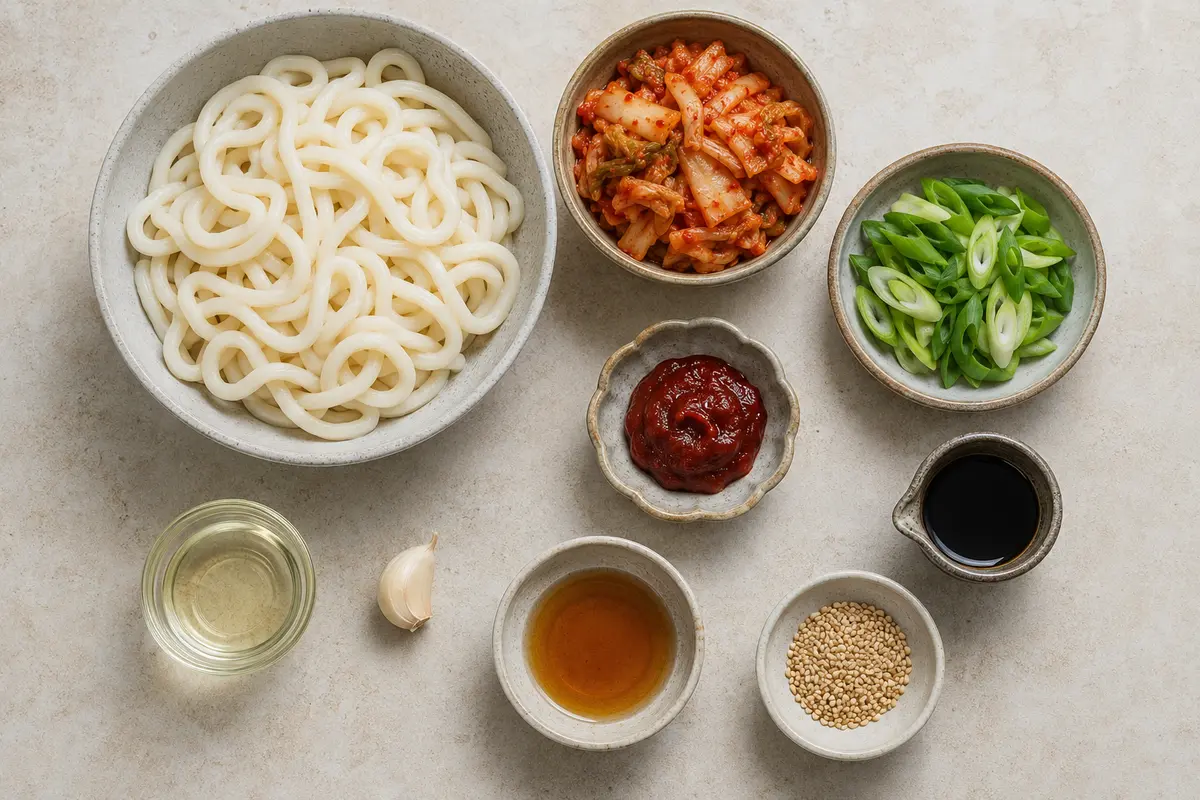
- Udon noodles: Two 7-ounce packages make two main-course servings. Fresh or frozen noodles are easier to loosen without prolonged boiling.
- Kimchi and its liquid: The chopped cabbage supplies texture, while two tablespoons of the liquid season the sauce.
- Gochujang: One tablespoon gives the sauce body and chile depth without hiding the kimchi.
- Soy sauce and brown sugar: Soy sauce adds salt; a teaspoon of sugar rounds the sharp edge of a very sour batch of kimchi.
- Scallions, garlic, sesame oil, and seeds: Cook the scallion whites and save the greens for the bowl. Add toasted sesame oil after turning off the heat.
Kimchi is not automatically vegetarian. Some brands use fish sauce or salted seafood, so check the label when that distinction matters.
How to make kimchi udon stir fry
1. Loosen, then drain the noodles
Separate the udon according to its package instructions. Stop as soon as the strands move freely, then drain. Do not press or pull apart a stubborn clump; another short dip in hot water is gentler.
2. Mix the sauce before cooking
Stir together the gochujang, soy sauce, brown sugar, kimchi liquid, and two tablespoons of water. Mixing first prevents a lump of gochujang from staying in one corner of the skillet.
3. Reduce the kimchi
Heat a wide skillet over medium-high heat. Add neutral oil, chopped kimchi, scallion whites, and garlic. Stir for three to four minutes, watching the pan rather than the clock: move to the next step when there is no loose pool of liquid.
4. Coat instead of crushing
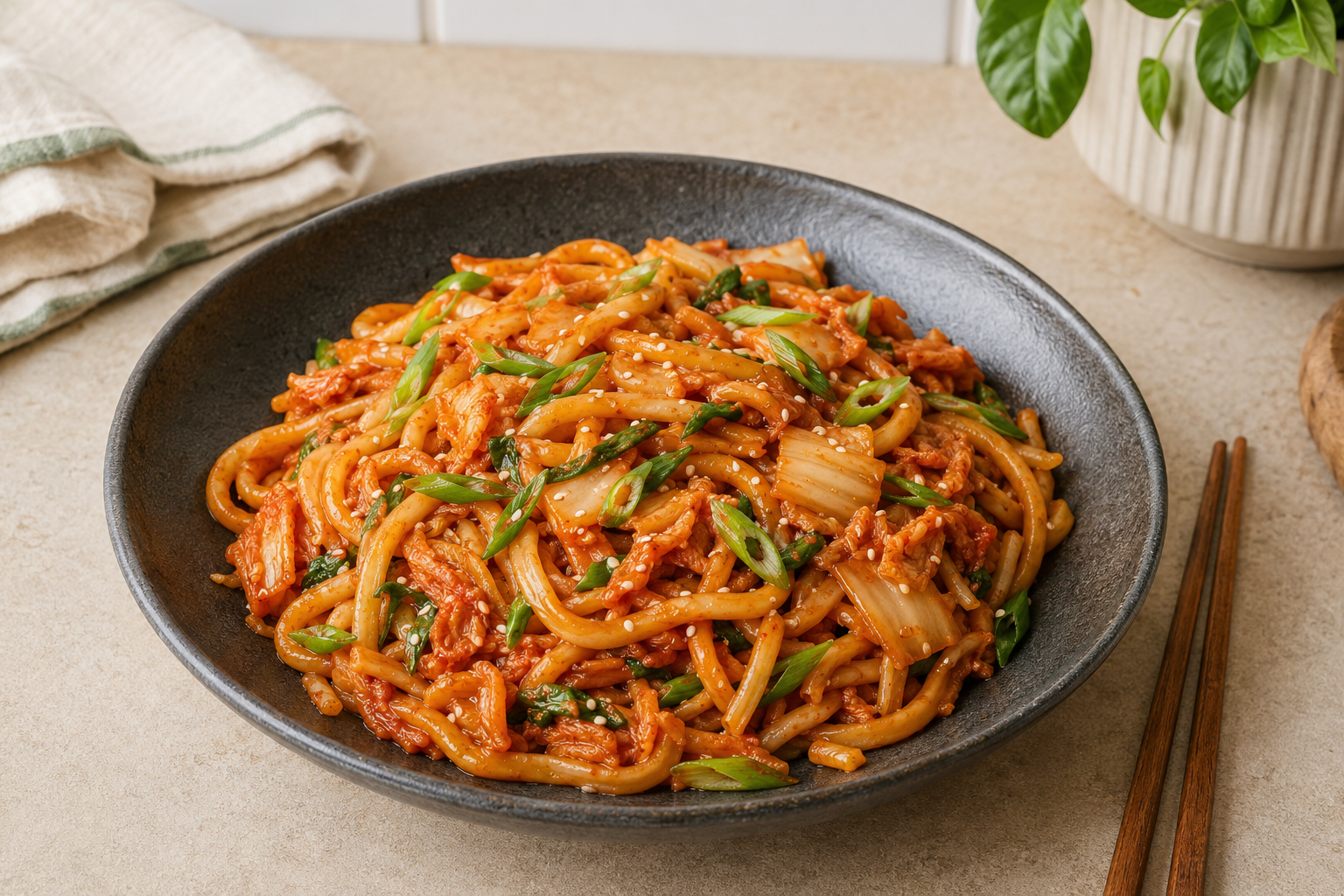
Add the drained udon and sauce. Lift and turn with tongs for two to three minutes. If the sauce tightens before the noodles are hot, add water one tablespoon at a time. Finish off the heat with sesame oil, scallion greens, and sesame seeds.
Kimchi Udon Stir Fry With Scallions and Sesame
Ingredients
Method
- Loosen the udon according to the package directions. Drain thoroughly. If using vacuum-packed noodles, warm them only until the strands separate; do not cook them until soft.
- Stir the gochujang, soy sauce, brown sugar, reserved kimchi liquid, and 2 tablespoons water together in a small bowl.
- Heat a wide skillet over medium-high heat. Add the neutral oil, kimchi, scallion whites, and garlic. Cook for 3 to 4 minutes, stirring often, until excess liquid has evaporated and the kimchi no longer leaves a watery pool in the pan.
- Add the drained udon and the sauce. Toss with tongs for 2 to 3 minutes, lifting rather than pressing the noodles, until the sauce coats the strands. Add 1 tablespoon water at a time only if the sauce tightens before the noodles are hot.
- Remove the skillet from the heat. Fold in the toasted sesame oil. Divide between two bowls and finish with scallion greens and sesame seeds.
Adjust the method to the udon you bought
Frozen udon: Briefly warm it in boiling water until the block releases. Drain at once.
Vacuum-packed udon: Some packages loosen in hot water; others can go directly into the skillet with a little water. Use the package directions as the deciding instruction.
Dried udon: Cook it just shy of the package time, drain, and rinse briefly with cool water to stop carryover cooking. Dried noodles absorb more sauce, so keep the final two tablespoons of water nearby.
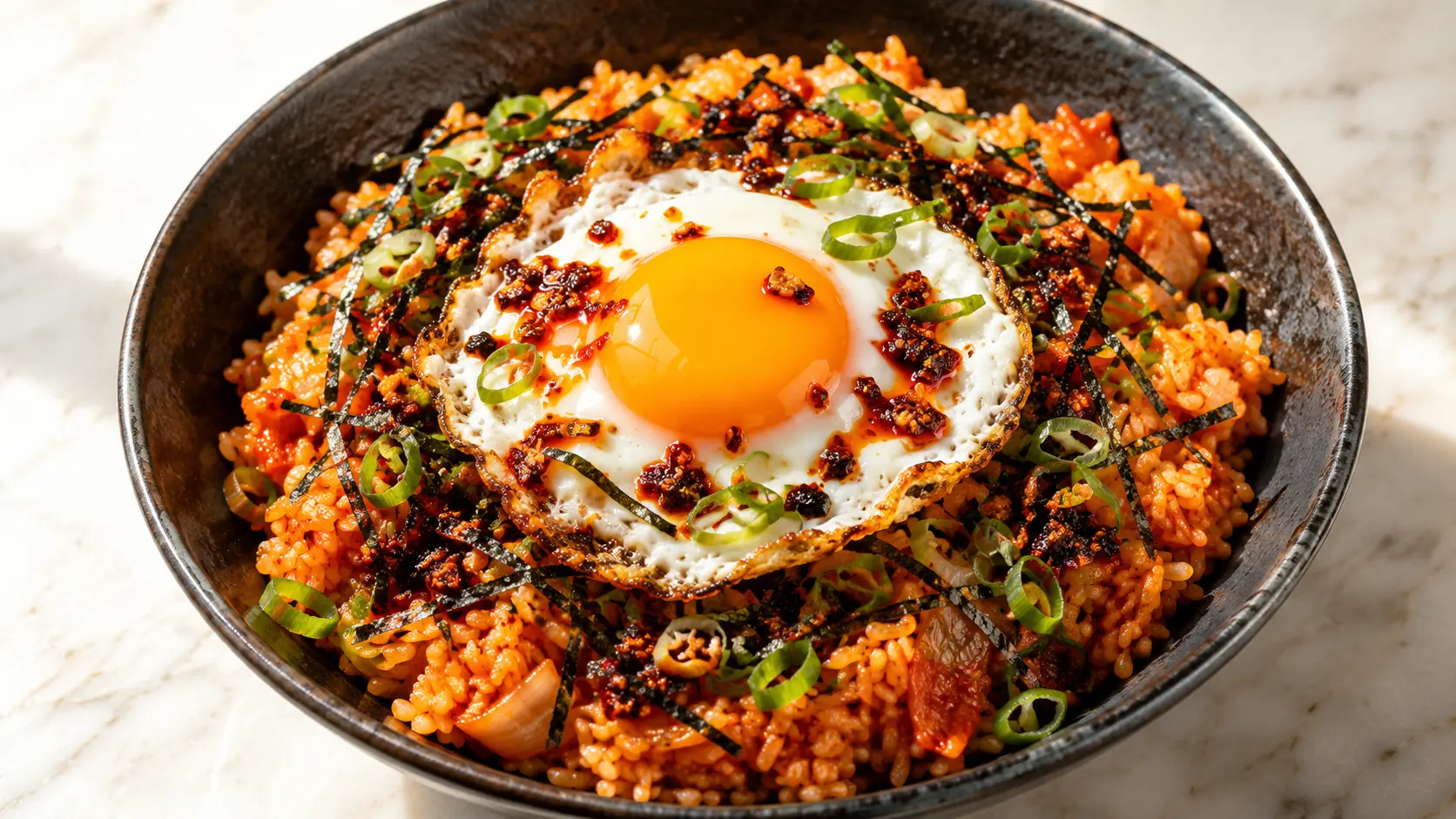
If you would rather use rice than noodles, the site’s kimchi fried rice uses a different moisture-control method: cold rice and a hot skillet.
Serving, storage, and reheating
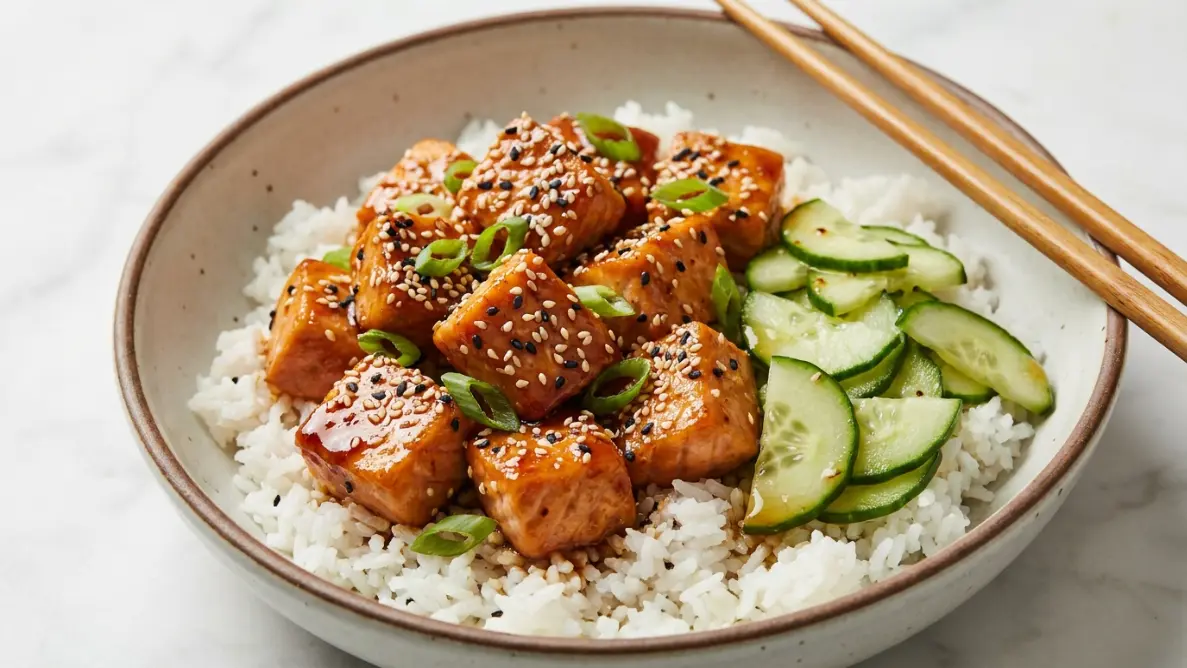
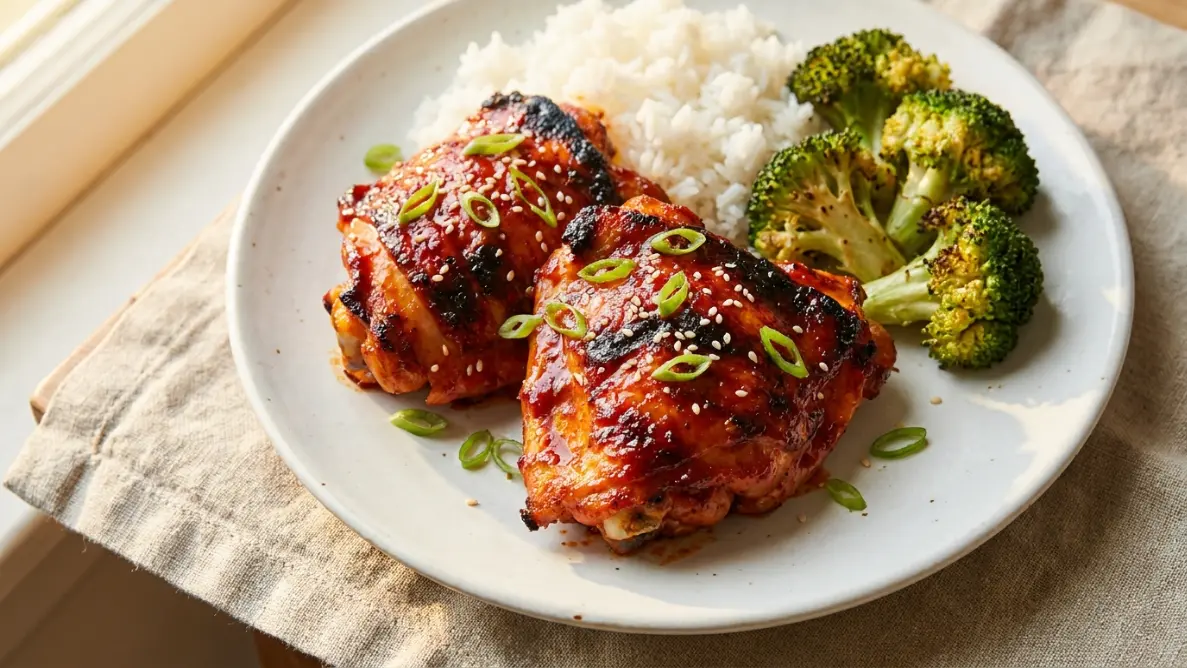
Serve the noodles immediately while the sauce is loose. A cucumber salad or quickly blanched greens add contrast without competing with the kimchi. For another gochujang-based main course, the sheet-pan chicken thighs explain how the paste behaves in a baked glaze.
Move leftovers to a shallow covered container and refrigerate within two hours. Use them within three to four days and reheat to 165°F (74°C), following the current FoodSafety.gov leftovers guidance. Add a spoonful of water before reheating so the sauce loosens without adding more oil.
Questions that change the result
Why did my udon break?
The noodles were probably softened too far before they reached the skillet, or they were pressed while still clumped. Loosen them only until flexible and lift them through the sauce rather than chopping through the pan with a spatula.
Can I make it less spicy?
Start with two teaspoons of gochujang and replace the missing teaspoon with water. Kimchi varies widely in heat, so taste a piece before deciding whether the full tablespoon makes sense for your jar.
Can I add protein?
Yes, but cook it separately or before the kimchi and follow the appropriate safe-temperature guidance for that ingredient. Crisp tofu is the simplest addition because it can be folded in during the final minute without changing the sauce ratio.
Editorial transparency: the photographs on this page are AI-generated illustrations, not documentary photographs of a kitchen test. The recipe uses conservative cooking ranges and observable pan cues; results can vary with the brand and type of udon and kimchi.
Leave a Reply