
Bottled hot honey is convenient, but a small homemade batch lets you control the type of chili, the heat level, and whether the flakes remain in the jar. The method takes only a few minutes of active work in one small saucepan.
Homemade hot honey sauce is a chili-infused syrup made in about five minutes by warming honey with dried chili flakes, a splash of vinegar, and a pinch of salt over low heat. It works best drizzled on fried chicken, hot pizza, biscuits, roasted vegetables, and sharp cheeses right before serving.
The perceived heat may build gradually because honey coats the palate. Chili type, quantity, infusion time, and serving temperature all affect how strong the finished sauce tastes, so the timing below should be treated as a starting point rather than a guarantee.
What Makes This a “Hot” Honey
Hot honey is not simply honey mixed with a water-based hot sauce. Warming honey gently with dried chili flakes distributes chili flavor through the syrup without thinning it as much as a liquid sauce would.
Capsaicin is poorly soluble in water and is associated with the fatty components of chili peppers. Thick honey can keep sweetness and chili heat on the palate, creating a contrast that works especially well with rich foods such as fried chicken and melted cheese.
Use a mild honey, fully dried chili flakes, and gentle heat that never reaches a simmer.
Ingredients You Need
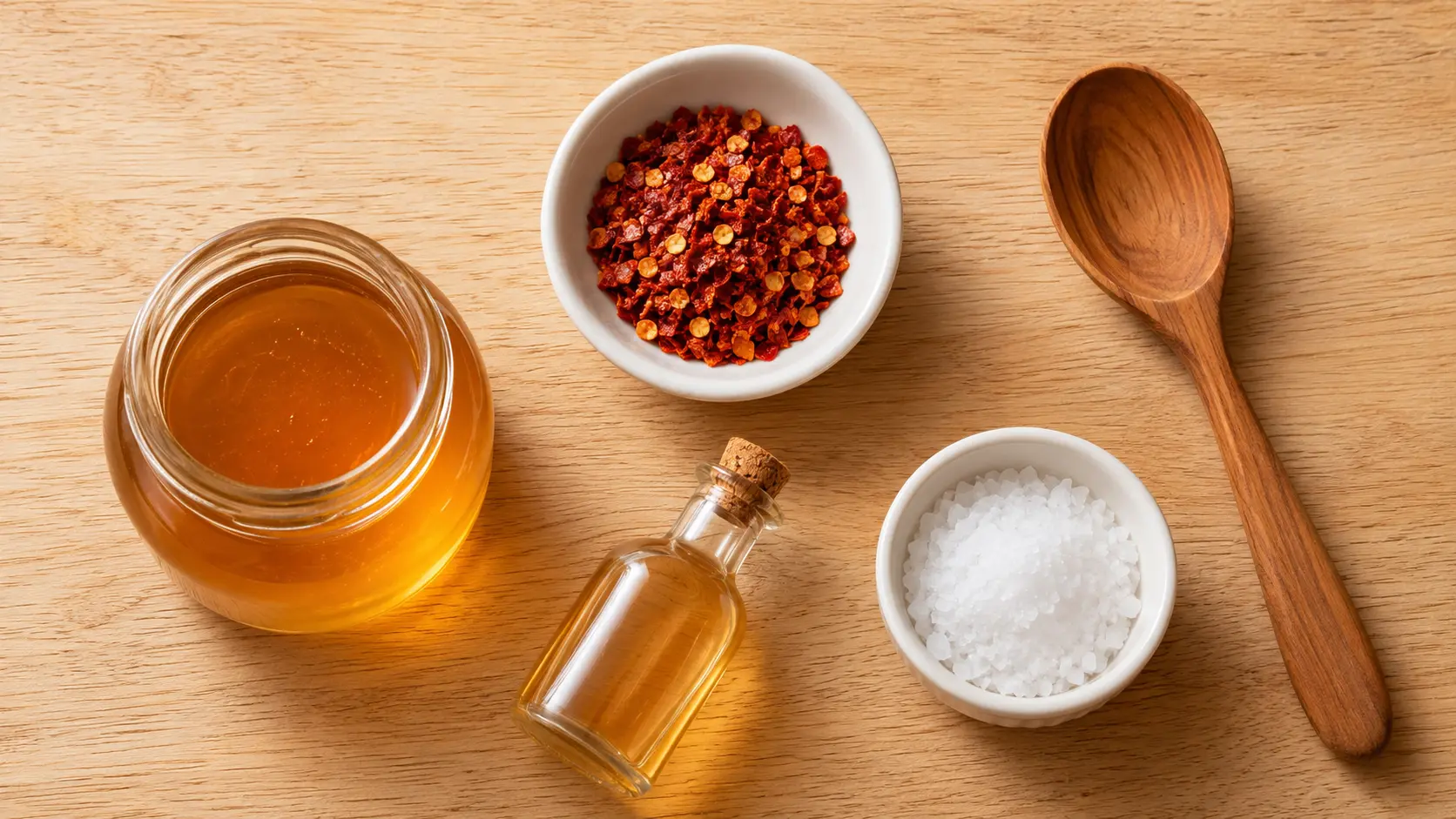
Four pantry ingredients make about ¾ cup of hot honey. A small batch is easier to refrigerate and use while its flavor is at its best.
The Honey
Use a mild, light-colored honey — clover, wildflower, or orange blossom. Skip manuka, buckwheat, and anything labeled “raw dark” for this recipe; their flavors fight the chili instead of framing it. You need ½ cup, which fits a small jar without wasting an expensive bottle.
The Chili Flakes
You have three good options, and each gives a different result. Standard crushed red pepper (the kind on pizzeria tables) delivers straightforward, sharp heat. Aleppo pepper is fruitier, slightly raisin-like, and milder. Gochugaru brings a smoky sweetness with less bite. Start with 2 teaspoons total. Avoid chili powder blends — they contain cumin and garlic and turn the honey muddy.
The Splash of Vinegar
Add 1 teaspoon of apple cider vinegar off the heat for flavor balance. It cuts the sweetness and adds a sharper finish, but this small amount is not a validated preservation step and should not be used to judge shelf stability.
You’ll also want a small pinch of flaky sea salt to finish. It rounds off the sugar so the heat can actually register.
The Method
Grab a small saucepan and a heat-safe jar. That’s it.
- Pour ½ cup honey into the saucepan. Warm over the lowest heat your stove will hold. You’re not cooking the honey — you’re loosening it. When it moves easily off the back of a spoon (about 90 seconds), it’s ready.
- Add 2 teaspoons chili flakes and a small pinch of flaky salt. Stir once. Within thirty seconds, the oils in the flakes will start staining the honey a warmer orange. That color shift is the signal that capsaicin is transferring.
- Turn off the heat. Let the honey sit in the pan with the flakes still submerged for at least 5 minutes and up to 10, depending on how much heat you want (next section).
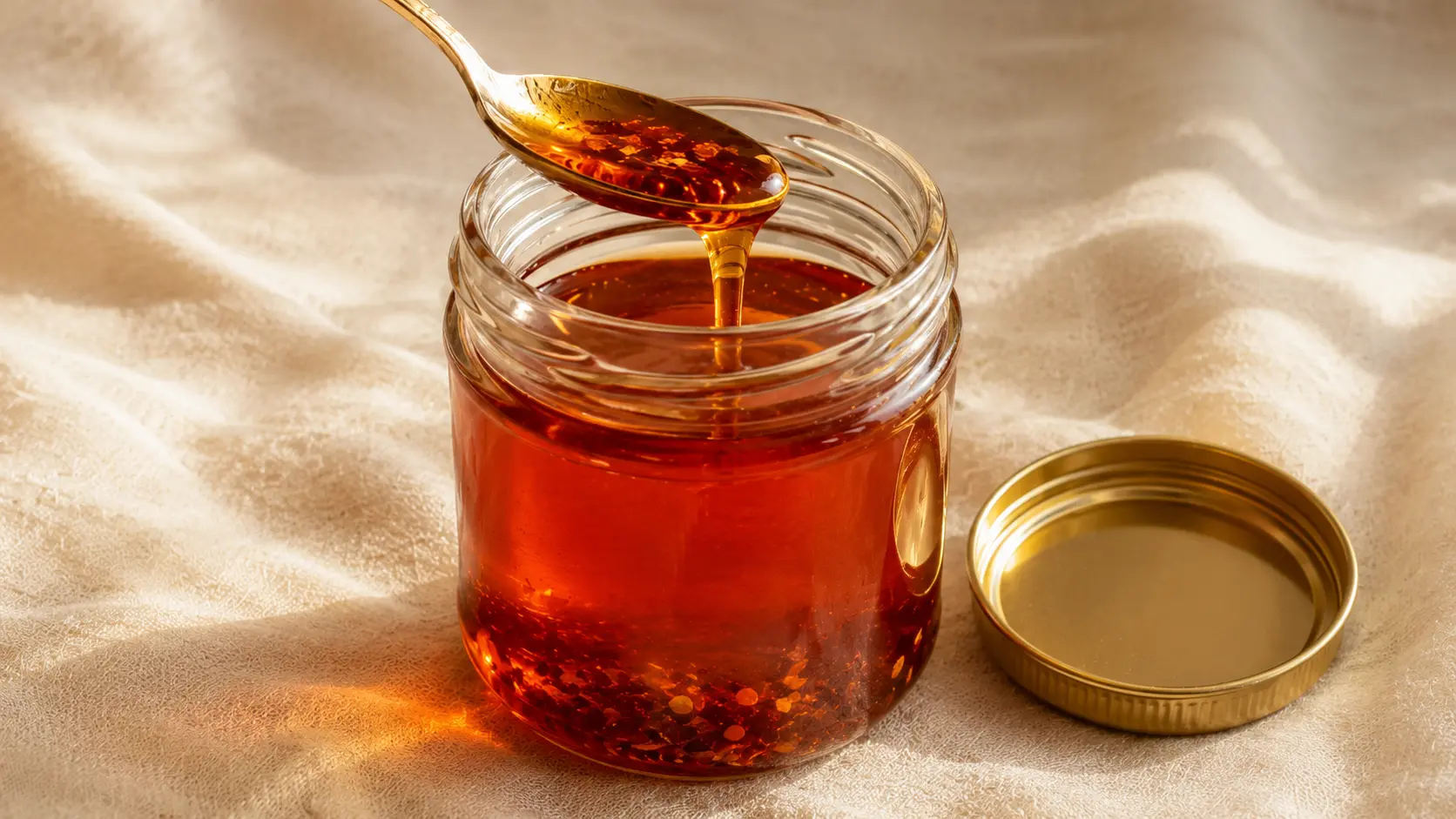
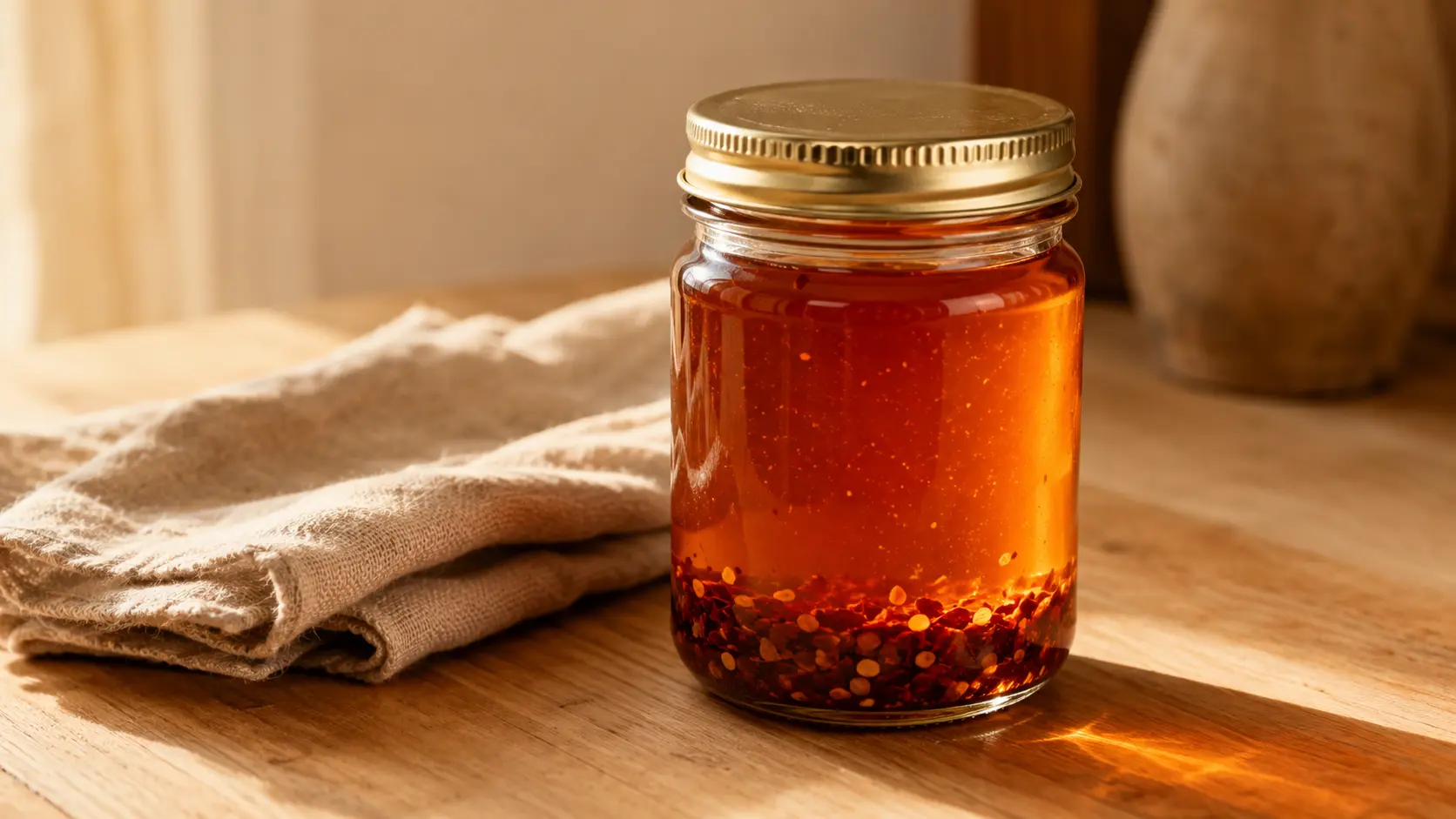
- Stir in 1 teaspoon apple cider vinegar off the heat. Adding it while the pan is still hot fizzes the sharpness right off — you want that clean acidity intact. Pour into a clean jar. Strain the flakes through a fine mesh sieve for smooth honey, or leave them in for a heat that builds over the following days.
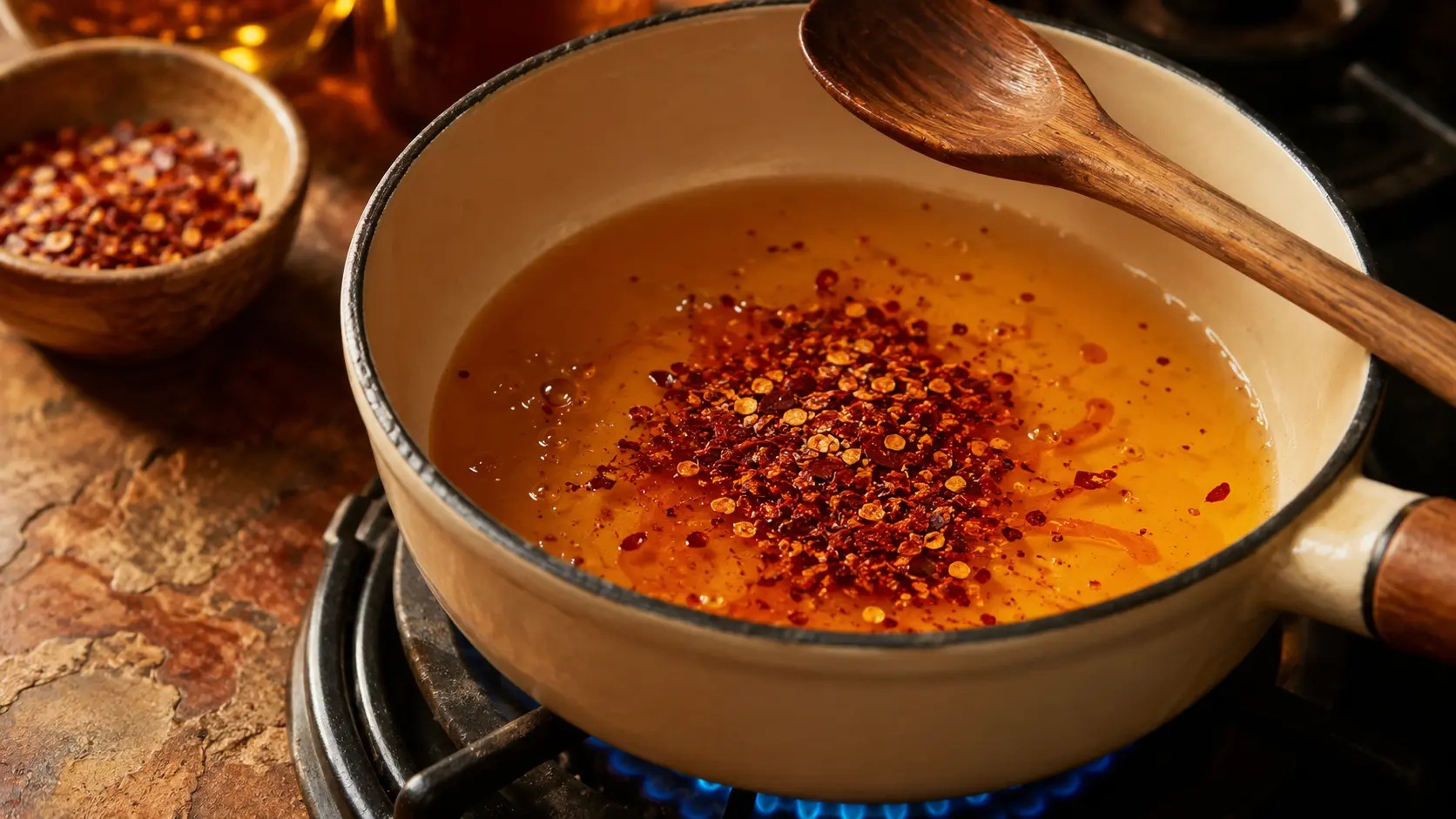
Under five minutes of active work, plus the rest.
Dialing In the Heat Level
Here’s what nobody tells you: the amount of chili is only half the equation. The time the flakes spend in the honey matters just as much, because capsaicin keeps leaching for as long as the flakes stay submerged.
Use this as a rough guide:
- Mild — 1 tsp flakes, 5 min rest, strain immediately.
- Medium — 2 tsp flakes, 8 min rest, strain.
- Hot — 2 tsp flakes, 10 min rest, leave flakes in the jar.
- Very hot (builds over days) — 1 tbsp flakes, no strain, use within 3 weeks.
Leaving the flakes in the jar means the honey keeps getting hotter as it sits. A batch that tastes mild on Sunday can catch you off guard by Thursday. If you want a stable, predictable heat, strain.
Using It on Chicken and Pizza
Hot honey goes on almost anything savory, but the two applications the title promises are where it earns its place.
On Fried or Roasted Chicken
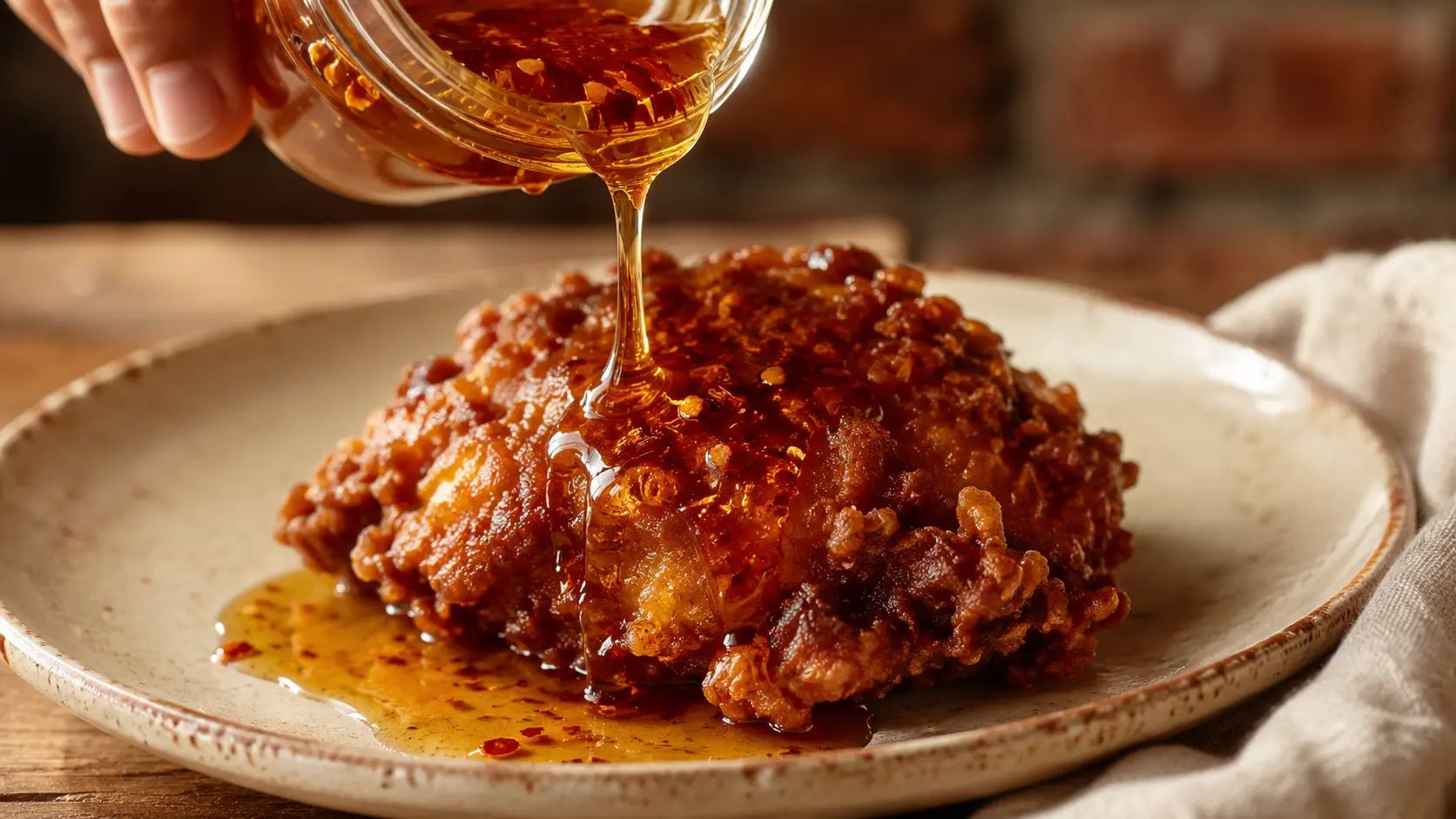
Drizzle over the chicken while it’s still hot — right out of the fryer, right off the roasting rack. The residual heat thins the honey so it grabs onto the crust instead of pooling on the plate. Use about 1 tablespoon per breaded thigh or drumstick. If the crust is very crispy (Nashville-style, double-fried), hit it just before serving; too early and the crust turns soft.
If you want the heat baked directly into the meat instead of drizzled on top, sheet pan gochujang chicken leans on Korean chili paste for a similar spicy-sweet register with more caramelization on the skin.
On Hot Pizza
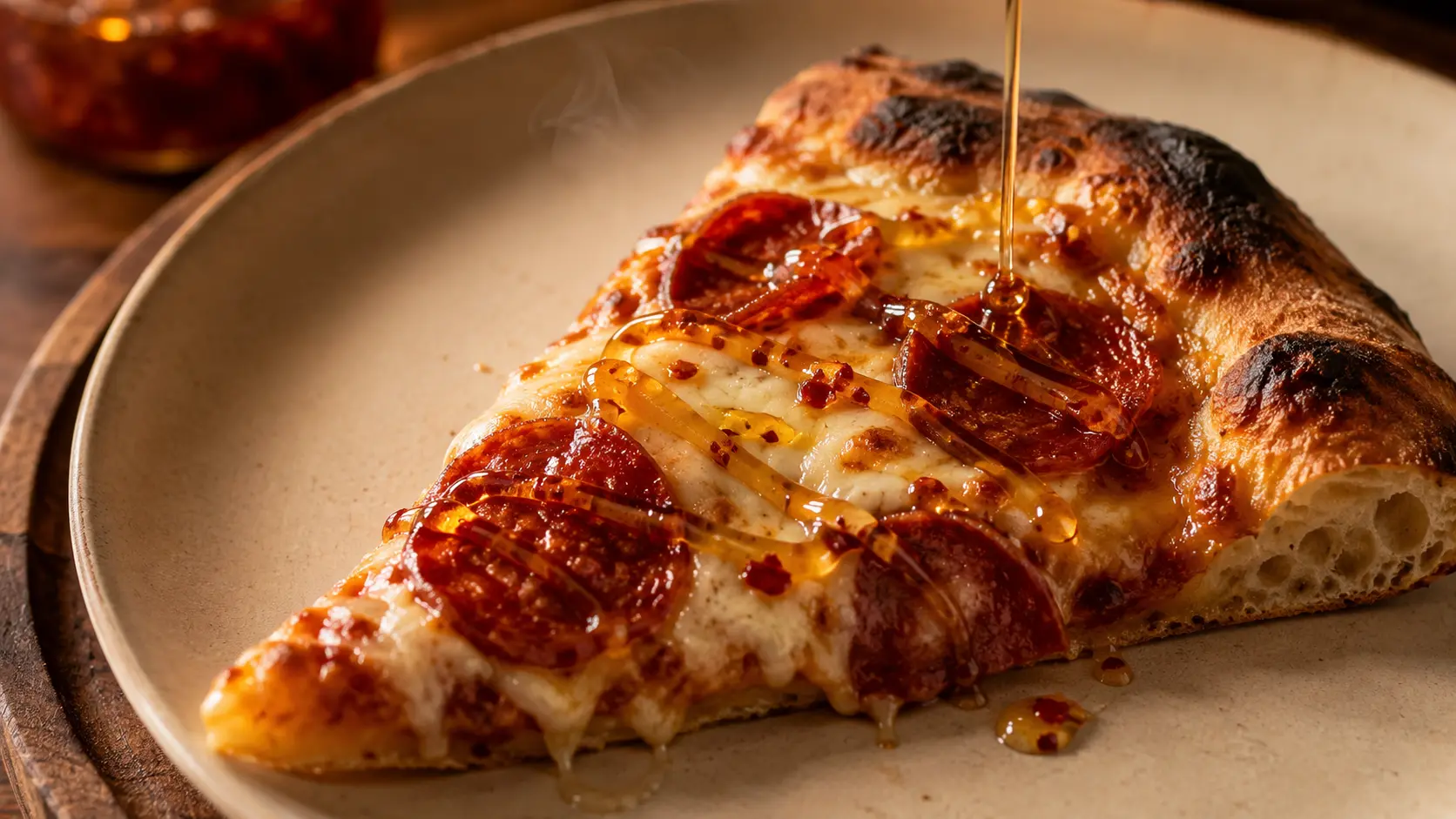
Always after the oven, never before. Honey’s sugar burns fast — apply it to a raw pie and the crust turns bitter. Slide the pizza out, let it settle for thirty seconds, then drizzle across the top in a thin zigzag. Pepperoni, sausage, spicy soppressata, and plain cheese all take it well. Margherita pizzas benefit especially — the sweet-heat cuts the mozzarella and tomato acidity in a way basil alone can’t.
Beyond those two, hot honey is excellent on hot buttermilk biscuits, roasted carrots, sharp cheddar, goat cheese crostini, and — genuinely — vanilla ice cream.
Storage and Shelf Life
Transfer the hot honey to a clean, dry glass jar, cool it, cover it, and refrigerate it. Because this home recipe does not measure finished pH or water activity, do not treat it as a shelf-stable preserved food. Always use a clean, dry spoon and make small batches. If the honey crystallizes, place the closed jar in a bowl of warm—not hot—water until it becomes fluid again.
Do not add fresh garlic, fresh herbs, or fresh peppers to a jar intended for room-temperature storage. Moist ingredients change the product and require a separately validated preservation method. Discard the batch if you notice mold, bubbling, pressure, an off odor, or other signs of spoilage.
Frequently Asked Questions
Can I use fresh chilies instead of dried flakes?
Not in this version. Fresh peppers add moisture and change storage requirements. Use fully dried flakes for the recipe as written. If you experiment with fresh peppers, refrigerate the mixture and consult a tested preservation method rather than relying on this recipe for shelf-life guidance.
What’s the difference between hot honey and hot sauce?
Hot sauce is generally thinner and more acidic, while hot honey is a thick sweetener infused with chili. They can both add heat, but they change a dish differently: hot sauce adds liquid and acidity, while hot honey adds sweetness, gloss, and a lingering chili flavor.
How long does homemade hot honey last?
This article does not assign a validated shelf-stable life. Refrigerate the jar, use clean utensils, make a small batch, and discard it at any sign of spoilage.
Can I make it less sticky for drizzling?
Warm the jar briefly before serving — 10 seconds in a bowl of warm tap water thins it enough to flow smoothly without diluting the heat.
Does it crystallize like regular honey?
Yes, especially in cold kitchens. It’s not spoilage. Warm the closed jar in a bath of warm water until it goes fluid again.
Homemade Hot Honey Sauce
Ingredients
Equipment
Method
- Pour 1/2 cup honey into a small saucepan. Warm over the lowest heat until it moves easily off the back of a spoon, about 90 seconds. Do not let it simmer or boil.
- Add 2 teaspoons chili flakes and a pinch of flaky sea salt. Stir once. Within about 30 seconds, the honey will shift to a warmer orange as the capsaicin transfers.
- Turn off the heat. Let the honey sit in the pan with the flakes still submerged for 5 to 10 minutes. Longer rest gives more heat.
- Stir in 1 teaspoon apple cider vinegar off the heat. Pour into a clean 8-ounce glass jar. Strain out the flakes for smooth honey, or leave them in for heat that builds over the following days.
Notes
Adjust the Heat to Taste
Taste a cooled drop before adjusting. If the heat is too mild, add a small amount of dried chili, warm gently, and rest again. If it is too strong, dilute it with additional honey. Chili varieties differ widely, so repeatable results depend on using the same flakes and recording the amount and rest time.
Leave a Reply