
Why wrestle cabbage leaves into neat little bundles when the best part can simmer in one pot?
This unstuffed cabbage roll soup gives you the same cozy mix of ground beef, cabbage, rice, tomatoes, and broth without boiling leaves, filling them, or rolling them one by one. It tastes like the inside of a cabbage roll turned into a bowl of soup: savory, tomato-rich, a little sweet from the cabbage, and hearty enough for dinner.
The only part that needs real attention is the rice. Add it too early, and it keeps drinking broth until the soup turns thick and soft. Add it the right way, and every bowl keeps that cabbage-roll feeling without becoming mushy.
Why This Soup Solves the Cabbage Roll Problem
Traditional cabbage rolls are worth the work, but they ask for a lot: softened cabbage leaves, filling, rolling, layering, sauce, and a long bake or simmer.
This version keeps the same flavor map and removes the fussy part.
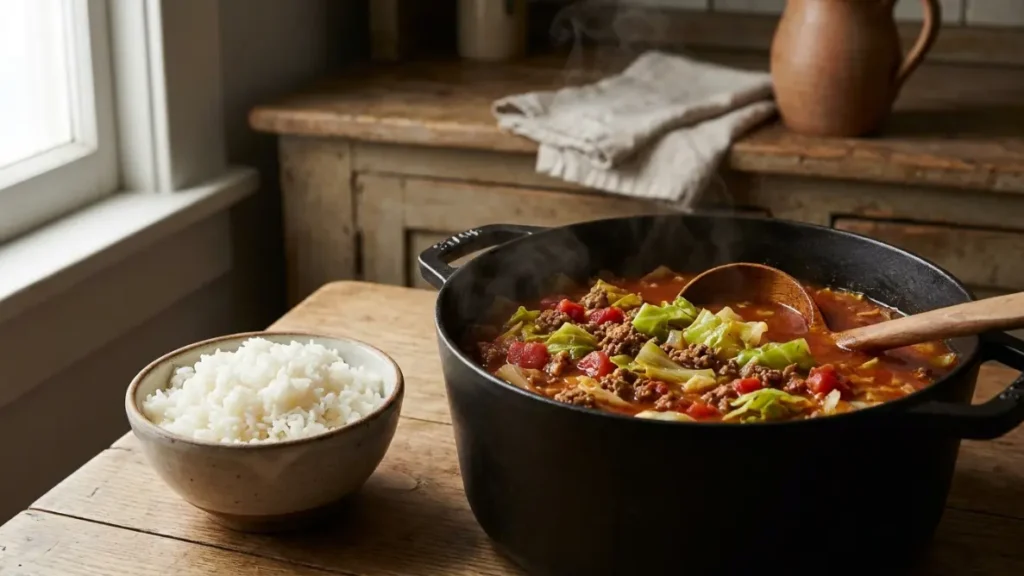
Ground beef gives the soup its savory base. Cabbage softens directly in the tomato broth. Rice brings the familiar stuffed-cabbage texture. Tomato sauce, diced tomatoes, onion, garlic, paprika, and bay leaf round everything out so the soup tastes slow-cooked even though it is built in one pot.
Gołąbki, often spelled golumpki in English-speaking kitchens, are Polish-style stuffed cabbage rolls usually filled with meat and rice. This soup is not trying to replace the traditional dish; it simply borrows the comfort of that filling-and-cabbage combination for a weeknight-friendly pot.
The Ingredients That Build Cabbage Roll Flavor
Use simple ingredients, but give each one a job.
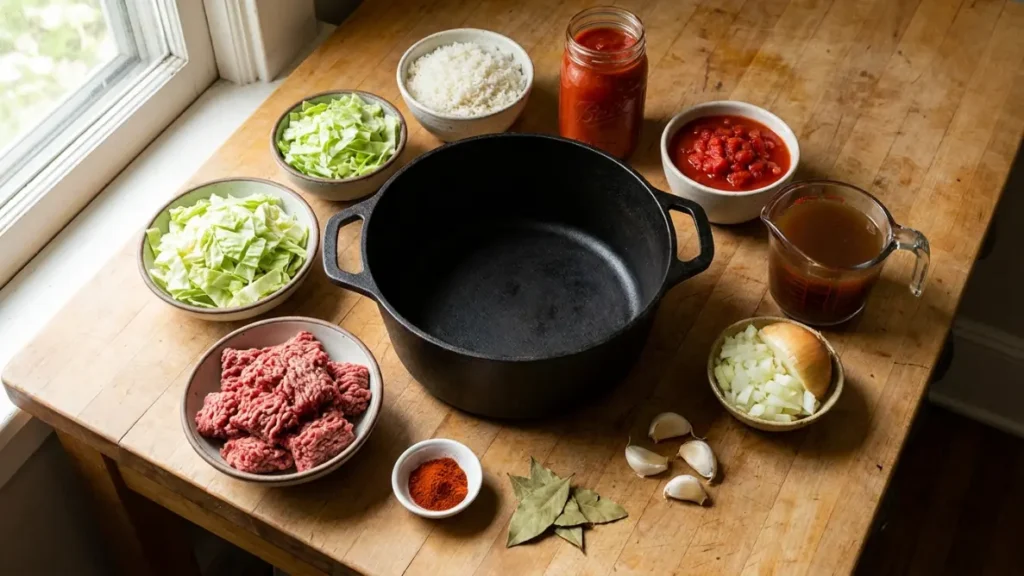
Ground beef: An 85/15 or 90/10 blend works well. The beef should brown before the broth goes in, because those browned bits make the soup taste fuller.
Green cabbage: Standard green cabbage is the best choice here. It softens without falling apart too quickly and gives the soup that familiar cabbage roll sweetness.
Cooked rice: For the best texture, use cooked long-grain white rice and stir it in near the end. This is the easiest way to avoid swollen, mushy rice.
Tomato sauce and diced tomatoes: Tomato sauce gives body, while diced tomatoes add little bursts of acidity. If you like a smoother broth, use crushed tomatoes instead of diced.
Beef broth: Use low-sodium broth if possible so you can control the salt after the soup simmers.
Onion and garlic: These create the base flavor before the cabbage and tomatoes go in.
Paprika, bay leaf, salt, and pepper: Paprika adds warmth without turning the soup spicy. Bay leaf gives the broth a quiet savory depth.
A small pinch of sugar: Optional, but useful if the tomatoes taste sharp. It should not make the soup sweet; it only rounds the edge.
Best Cabbage Cut for Soup
Cut the cabbage into short strips or bite-size pieces, about 1 to 1½ inches wide.
Too fine, and it disappears into the broth. Too large, and the spoon feels clumsy. The goal is cabbage that folds softly around the beef and rice, the way a cabbage roll leaf would.
Rice Options Without Mushy Soup
This is the detail that makes the recipe work.
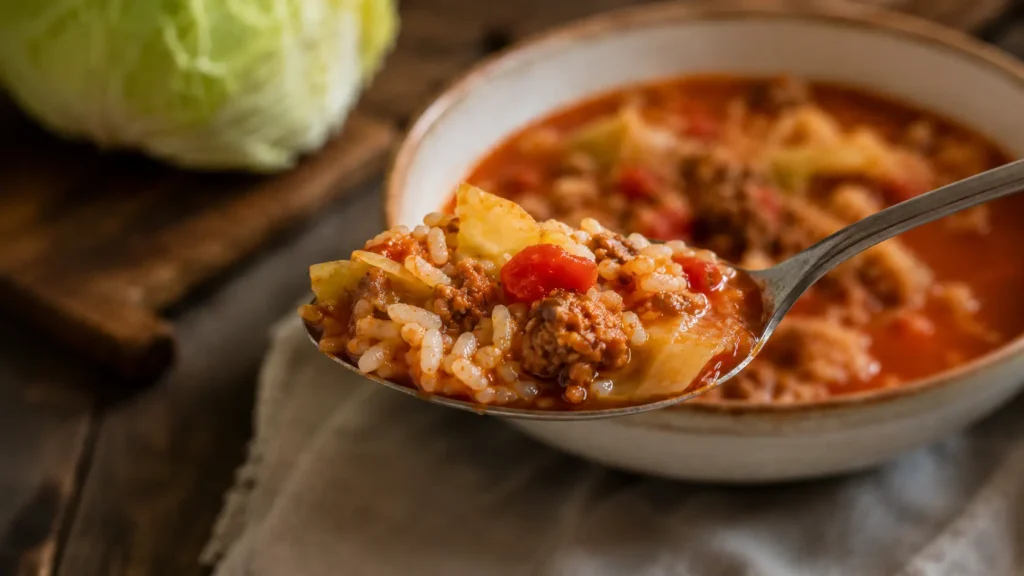
For the best everyday version, cook the rice separately and add it to each bowl or stir it into the pot during the last 2 minutes. The rice warms through but does not keep absorbing broth for the whole simmer.
If you want to cook raw rice directly in the soup, add ½ cup uncooked long-grain white rice with the broth and simmer until tender, about 18 to 20 minutes. The soup will be thicker, and leftovers will soften more.
For meal prep, store the rice separately. That one habit keeps the soup from turning into a tomato-rice stew overnight.
How to Make Unstuffed Cabbage Roll Soup
Start with a large Dutch oven or heavy soup pot. Heat 1 tablespoon olive oil over medium-high heat, then add 1 pound ground beef.
Break the beef into small crumbles and cook for 6 to 8 minutes, until browned and no longer pink. If there is a lot of excess fat in the pot, spoon some off, but leave a little behind for flavor.
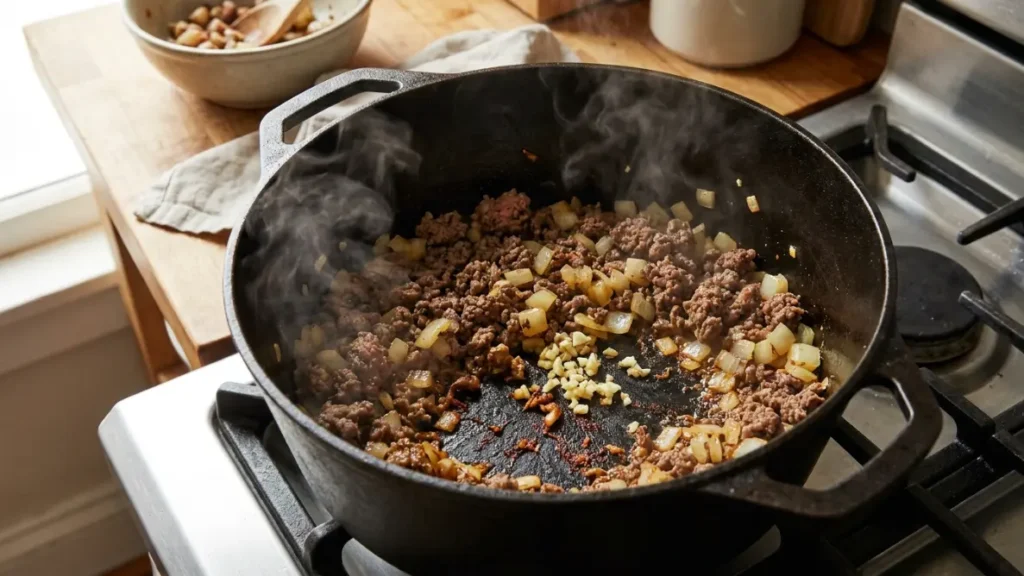
Add diced onion and cook for 3 to 4 minutes, until the onion softens around the edges. Stir in the garlic, paprika, salt, and pepper. Cook for about 30 seconds, just until the garlic smells warm.
Add the chopped cabbage. It will look like too much at first. Stir it through the beef mixture for 2 to 3 minutes, until the edges begin to relax.
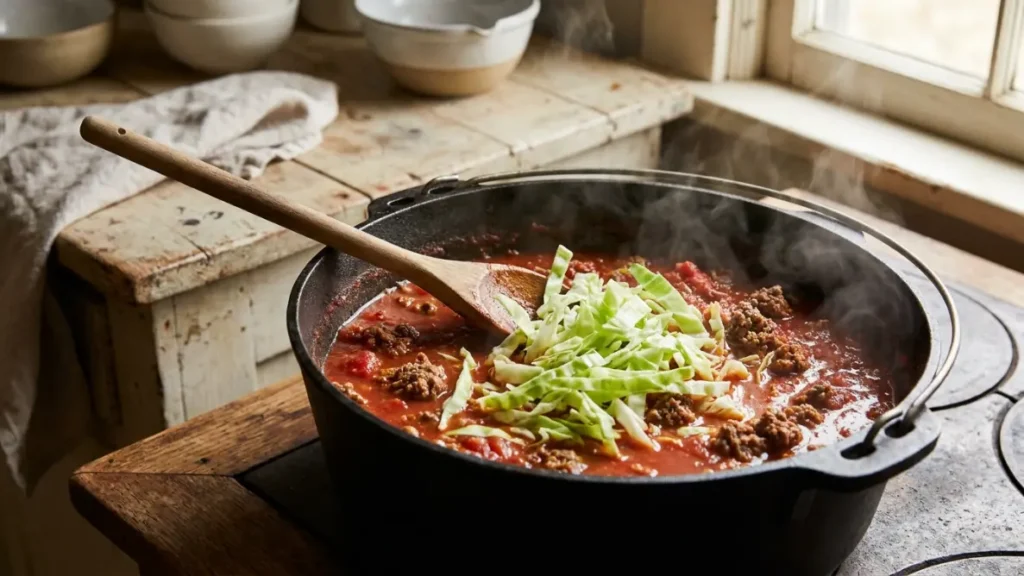
Pour in the tomato sauce, diced tomatoes, beef broth, Worcestershire sauce, bay leaf, and a small pinch of sugar if using. Scrape the bottom of the pot so the browned beef bits dissolve into the broth.
Bring the soup to a boil, then reduce the heat to a steady simmer. Cook uncovered for 25 to 30 minutes, until the cabbage is tender but not gray or limp.
Turn off the heat. Remove the bay leaf. Stir in cooked rice just before serving, or spoon rice into bowls and ladle the soup over the top.
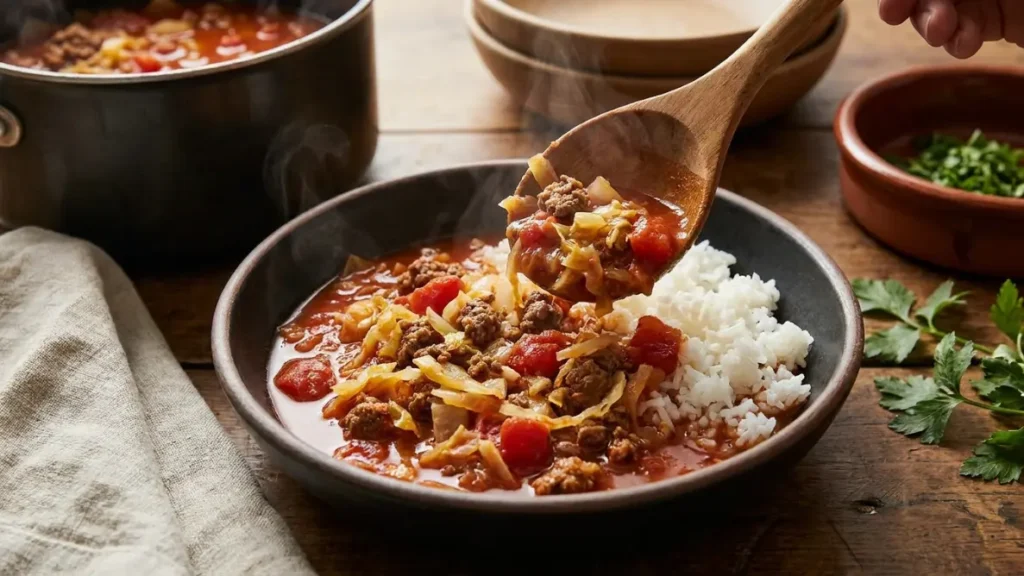
Taste once more. Cabbage and rice both soften salt, so the soup may need a final pinch.
Brown the Beef First
Do not rush this step. Browning the beef before adding the liquid gives the broth a deeper flavor.
If the beef steams instead of browns, let it sit untouched for a minute at a time before stirring. Small browned spots on the bottom of the pot are a good sign, not a problem.
Simmer the Cabbage Until Tender, Not Gray
The cabbage should be soft enough to scoop easily but still visible in the bowl.
If it turns dull gray and stringy, it has gone too far. The soup will still be edible, but it loses the gentle cabbage-roll texture that makes this recipe feel familiar.
Practical Tips for Better Texture and Broth
Keep the rice separate until serving if you care about leftovers. This is the most important tip in the whole recipe.
Use enough broth. Cabbage releases liquid as it cooks, but rice absorbs it fast. If the soup sits for 15 minutes after the rice goes in, you may need to loosen it with another cup of broth.
Balance the tomato. Some canned tomatoes taste sharper than others. If the broth tastes too acidic after simmering, add a small pinch of sugar or a splash more broth before adding more salt.
Let the cabbage soften before judging thickness. At first, the pot may look crowded and dry. After 10 minutes, the cabbage relaxes and the broth level makes more sense.
Cut the beef crumbles small. Big chunks of ground beef make the soup feel less like cabbage rolls and more like a loose beef stew.
Common Mistakes to Avoid
Adding cooked rice too early: Cooked rice does not need to simmer. It only needs to warm. Add it at the end or directly to bowls.
Using too much rice: One cup of cooked rice may not look like much, but it expands the feeling of the soup quickly. Add more only after the first serving if you want a thicker bowl.
Skipping the beef browning step: Boiled ground beef tastes flat. Browning builds the base before the tomato and cabbage go in.
Cutting the cabbage too thin: Thin shreds can overcook and make the soup feel like tomato coleslaw. Use short, sturdy pieces.
Forgetting the final taste check: Tomato, broth, cabbage, and rice all change the salt level. Taste at the end, not only at the beginning.
Variations and Simple Swaps
For a lighter flavor, use ground turkey instead of beef. Add an extra teaspoon of olive oil when browning it, because turkey is leaner and can taste drier.
For a richer soup, use half ground beef and half ground pork. That blend leans closer to the filling used in many stuffed cabbage recipes.
Brown rice works, but cook it separately first. It takes longer than white rice and can throw off the timing of the cabbage.
For a low-rice version, use cauliflower rice. Stir it in during the last 3 to 5 minutes so it keeps some texture.
For a tangier bowl, add ¼ cup chopped sauerkraut near the end. Keep it modest. You want a little fermented brightness, not a full sauerkraut soup.
For heat, add crushed red pepper flakes with the garlic or serve with hot sauce at the table.
Storage, Freezing, and Reheating
Divide the soup into shallow, covered containers and refrigerate it within 2 hours of cooking; do not leave the full pot on the counter until it reaches room temperature. For the best texture, store the rice separately from the broth and cabbage mixture.
FoodSafety.gov lists soups and stews with meat or vegetables at 3 to 4 days in the refrigerator and 2 to 3 months in the freezer. It also lists ground meat at a safe minimum internal temperature of 160°F / 71°C and leftovers at 165°F / 74°C when reheated.
To freeze, portion the soup without rice if possible. Thaw overnight in the refrigerator, then reheat gently on the stove. Add fresh cooked rice when serving.
If the soup thickens after chilling, add a splash of broth or water while reheating. Tomato broth tightens up in the refrigerator, especially if any rice was stored in the same container.
FAQ
Can I make unstuffed cabbage roll soup with raw rice?
Yes, but the soup will be thicker. Add ½ cup uncooked long-grain white rice when you add the broth and simmer until tender, about 18 to 20 minutes. For leftovers, cooked rice added at the end gives a better texture.
What kind of cabbage is best for cabbage roll soup?
Green cabbage is the best everyday choice. It softens well, holds its shape, and gives the soup the gentle sweetness you expect from cabbage rolls. Savoy cabbage also works, but it cooks faster.
Can I freeze cabbage roll soup?
Yes, but freeze it without the rice for the best texture. Rice absorbs liquid as it sits and can become soft after thawing. Add freshly cooked rice when you reheat the soup.
Is this the same as golumpki soup?
It is a simplified, soup-style version inspired by golumpki or gołąbki flavors. Instead of stuffing cabbage leaves with meat and rice, the cabbage, beef, rice, and tomato broth cook together in one pot.
Can I make it in a slow cooker?
Yes. Brown the beef with the onion and garlic first, then transfer it to the slow cooker with the cabbage, tomatoes, broth, and seasonings. Cook on low for 5 to 6 hours or high for 3 to 4 hours. Stir cooked rice in at the end.
How do I keep the rice from getting mushy?
Cook the rice separately and add it right before serving. For meal prep, put rice in individual containers or add it to bowls, then ladle the hot soup over it.
Unstuffed Cabbage Roll Soup With Ground Beef
Ingredients
Method
- Heat the olive oil in a large Dutch oven or soup pot over medium-high heat.
- Add the ground beef and cook for 6 to 8 minutes, breaking it into small crumbles, until browned and no longer pink. Spoon off excess fat if needed.
- Add the diced onion and cook for 3 to 4 minutes, until softened.
- Stir in the garlic, paprika, salt, and black pepper. Cook for 30 seconds, until fragrant.
- Add the chopped cabbage and stir for 2 to 3 minutes, until it begins to soften slightly.
- Add the tomato sauce, diced tomatoes, beef broth, Worcestershire sauce, bay leaf, and sugar if using. Scrape the bottom of the pot to release browned bits.
- Bring to a boil, then reduce the heat and simmer uncovered for 25 to 30 minutes, until the cabbage is tender.
- Remove the bay leaf. Stir in the cooked rice just before serving, or add rice directly to bowls and ladle the soup over it.
- Taste and adjust salt and pepper. Garnish with parsley if desired.
Notes
Final Note
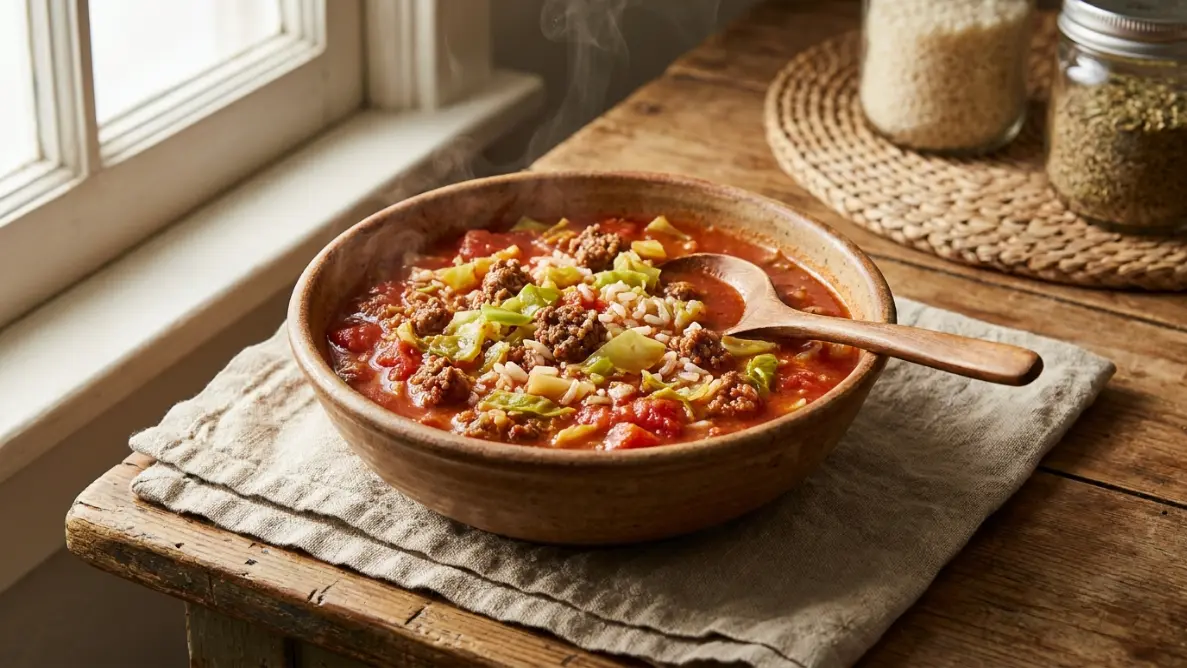
A good bowl should look like a cabbage roll came apart on purpose: soft cabbage, small crumbles of beef, red tomato broth, and rice that still has its shape. If the next-day soup is too thick, the recipe did not fail — the rice just kept working. Add broth, warm it slowly, and keep the rice separate next time.

Leave a Reply