
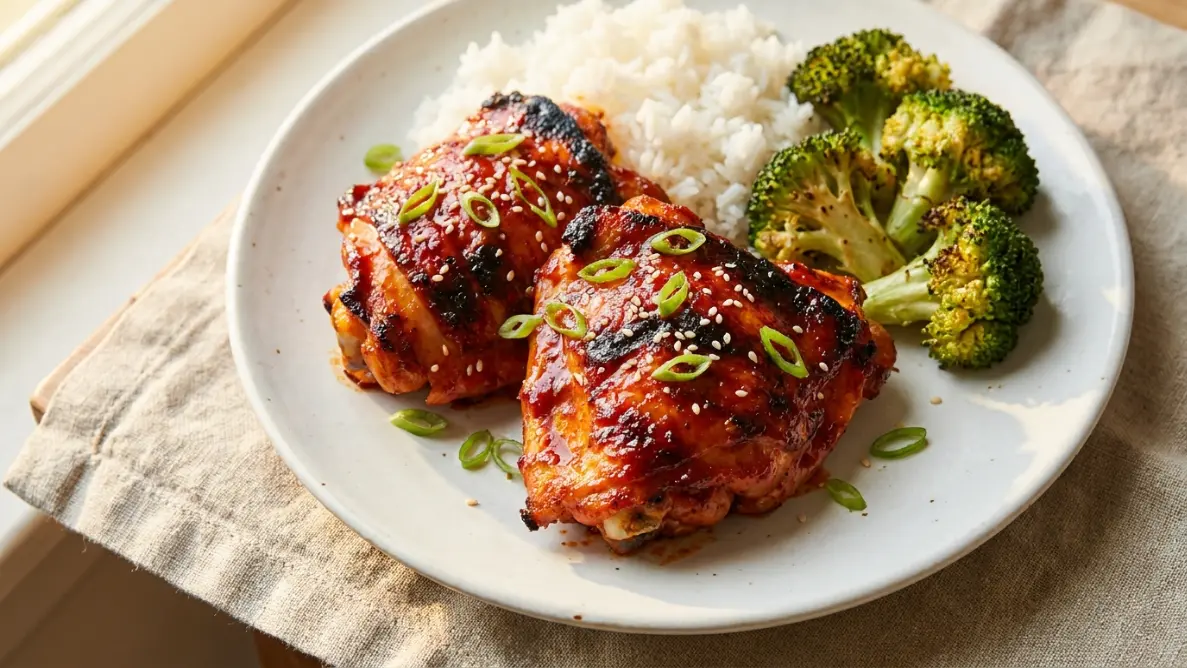
As bone-in chicken thighs roast, rendered fat helps the gochujang glaze caramelize around the edges. A brief broil can deepen the browning, but watch the pan closely because honey and gochujang can scorch quickly.
Sheet pan gochujang chicken thighs are one of those meals that deliver way more flavor than the effort suggests. Bone-in thighs get coated in a sticky marinade of gochujang paste, honey, soy sauce, and sesame oil, then roasted at 425°F alongside vegetables until caramelized and crispy at the edges. The whole dinner cooks on one pan in about 35 minutes, with a quick broil at the end for that charred, sticky finish. No wok, no grill, no special equipment.
Why Gochujang Changes Everything on a Sheet Pan
Most sticky chicken recipes rely on a glaze built around honey or brown sugar. Gochujang does something different. It already contains its own sugars — they come from the glutinous rice that ferments during production — so when you add honey on top, you’re layering two kinds of sweetness that caramelize at different rates. The fermented sugars in gochujang brown faster and deeper than honey alone, which is what creates those dark, lacquered edges without needing a grill or a torch.
Gochujang is a Korean fermented chili paste made from red chili powder, glutinous rice, fermented soybeans, and salt. The flavor is not just hot. It has a savory depth that plain chili flakes or sriracha can’t replicate — a slow, building heat layered with umami and a malty sweetness.
One thing worth knowing before you shop: gochujang comes in two forms. The paste, sold in a squat plastic tub, is thick and dense. The sauce, sold in squeeze bottles, is thinner and already diluted with vinegar or sugar water. For this recipe, you want the paste. The squeeze-bottle sauce won’t cling to the chicken the same way, and it burns faster because of its thinner consistency.
Ingredients You Need
For the Marinade
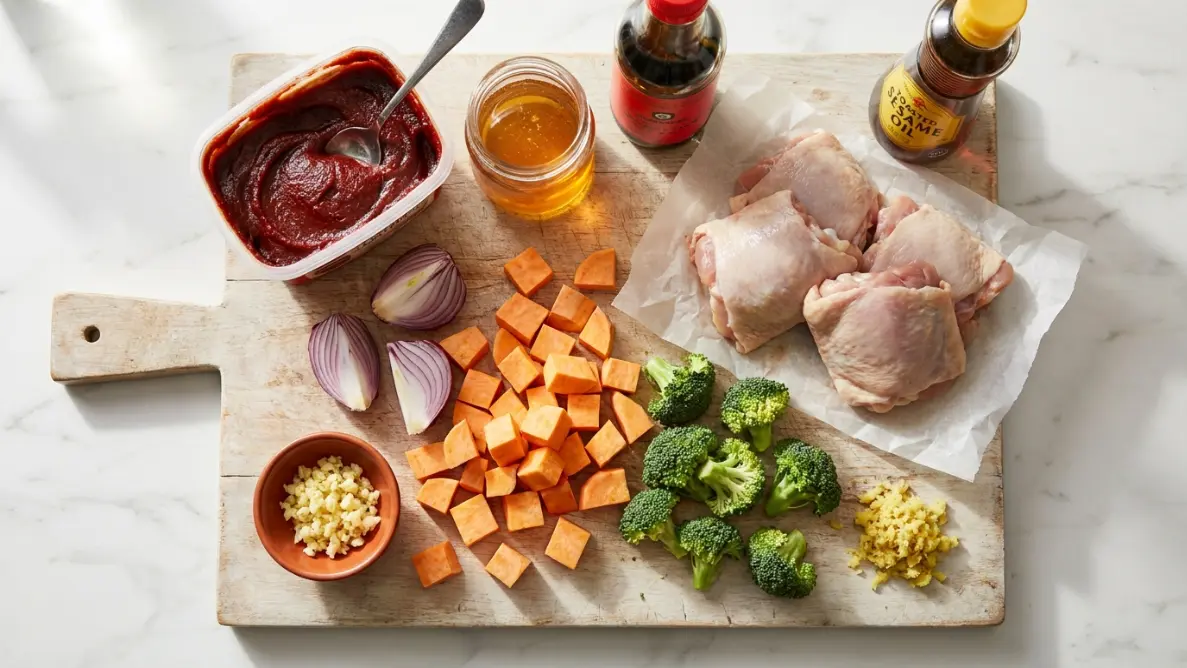
- 3 tablespoons gochujang paste — the backbone of the flavor. Start here and adjust up if you like heat. Brands vary in spiciness; most labeled “mild” still carry real warmth.
- 2 tablespoons honey — rounds out the fermented tang and helps the glaze stick during roasting.
- 1 tablespoon soy sauce — adds salt and umami without needing to season the chicken separately.
- 1 tablespoon toasted sesame oil — this is the roasted kind, dark amber in color. Regular sesame oil won’t give you that nutty aroma.
- 1 tablespoon rice vinegar — thins the marinade just enough to coat evenly and balances the sweetness with a clean acidity.
- 3 cloves garlic, minced
- 1 teaspoon fresh ginger, grated — ground ginger works in a pinch (use ½ teaspoon), but fresh gives a sharper, brighter note.
For the Sheet Pan
- 6 bone-in, skin-on chicken thighs (about 2 to 2½ pounds) — bone-in holds moisture better than boneless at high heat. Pat them very dry before marinating.
- 1 medium sweet potato, cut into ¾-inch cubes — dense enough to need a head start in the oven.
- 2 cups broccoli florets — these go in later so they don’t turn to mush.
- 1 small red onion, cut into wedges
- 1 tablespoon olive oil — for the vegetables only. The chicken gets enough fat from the marinade and its own skin.
- Salt and black pepper — for seasoning the vegetables.
Substitutions that work: Swap sweet potato for butternut squash (same timing). Swap broccoli for green beans or zucchini (same late-add timing). If you only have boneless skinless thighs, reduce total oven time by about 8 minutes and skip the broil — boneless dries out fast under direct heat.
How to Make Sheet Pan Gochujang Chicken Thighs
Step-by-Step
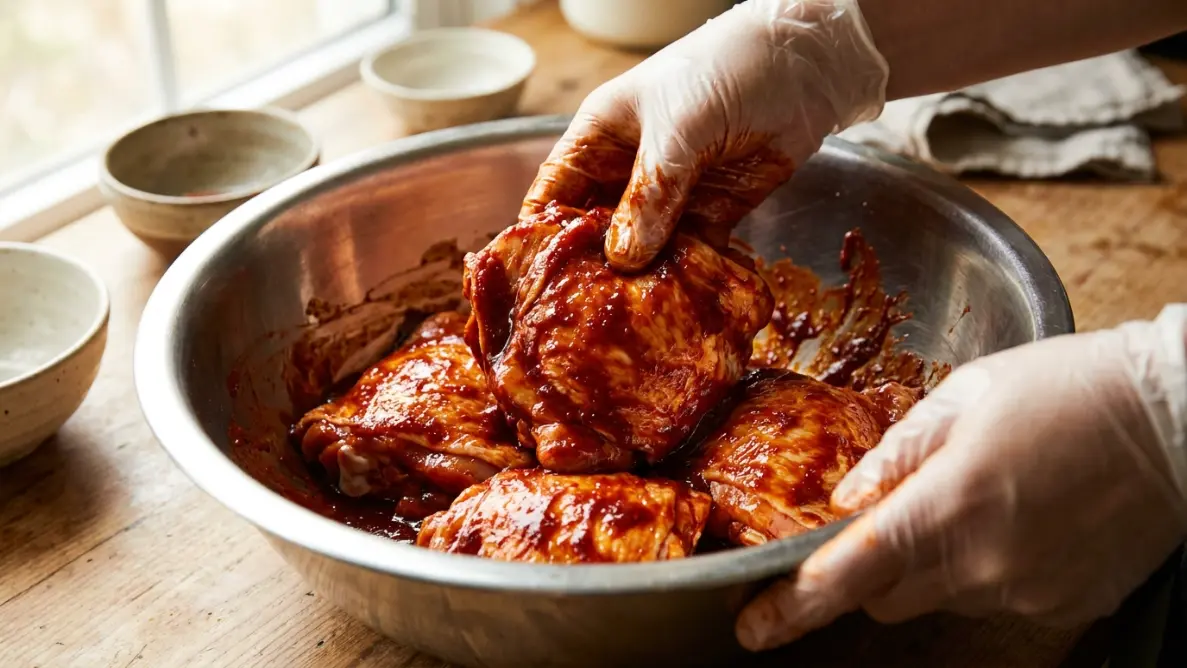
1. Mix the marinade. Whisk together gochujang, honey, soy sauce, sesame oil, rice vinegar, garlic, and ginger in a large bowl until smooth. The mixture should look like a glossy, dark red-orange paste. Reserve about 2 tablespoons of this marinade in a small separate bowl — you’ll use it later for the second glaze layer.
Coat the chicken. Pat the thighs completely dry with paper towels. Add the thighs to the bowl and turn them in the marinade until every surface is coated, working some under the skin if possible. Let them stand only while you prepare the vegetables and preheat the oven, about 15 to 20 minutes; refrigerate the marinating chicken if preparation will take longer.
3. Preheat the oven to 425°F (220°C). Position the rack in the upper third of the oven, one notch below the broiler element.
4. Start the sweet potatoes first. Toss the sweet potato cubes and red onion wedges with olive oil, a pinch of salt, and pepper. Spread them on a large rimmed sheet pan (at least 18×13 inches — a half-sheet pan). Roast alone for 12 to 15 minutes, until the sweet potato edges just start to soften and pick up some color.
5. Add the chicken. Pull the pan out, push the vegetables to the edges, and place the chicken thighs skin-side up in the center. Leave at least an inch of space between each thigh. Crowding traps steam and kills the crisp. Return to the oven and roast for 15 minutes.
6. Add the broccoli. Pull the pan out again, scatter broccoli florets into the gaps between the chicken and the other vegetables. Roast for another 10 minutes.
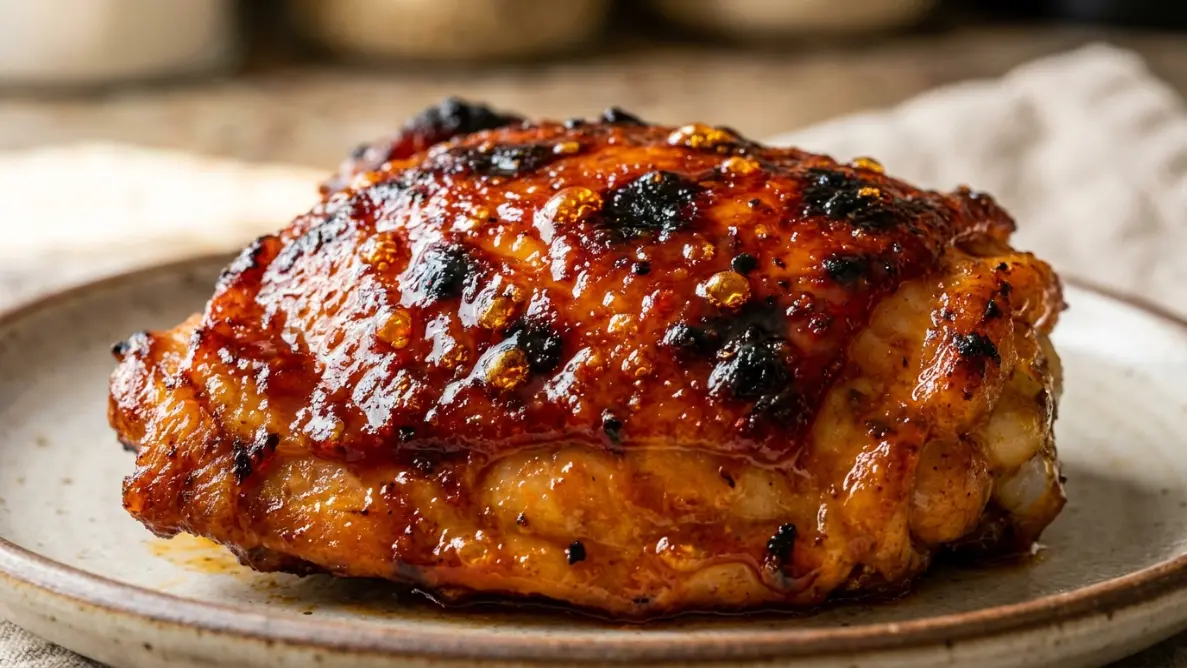
7. Broil for the crispy finish. Brush the reserved 2 tablespoons of marinade over the chicken skins — this is the second glaze layer. Switch the oven to broil (high). Broil for 2 to 3 minutes, watching constantly. The glaze will bubble and tighten into a sticky, dark crust. Pull the pan the moment the edges look blistered and deep amber, not black.
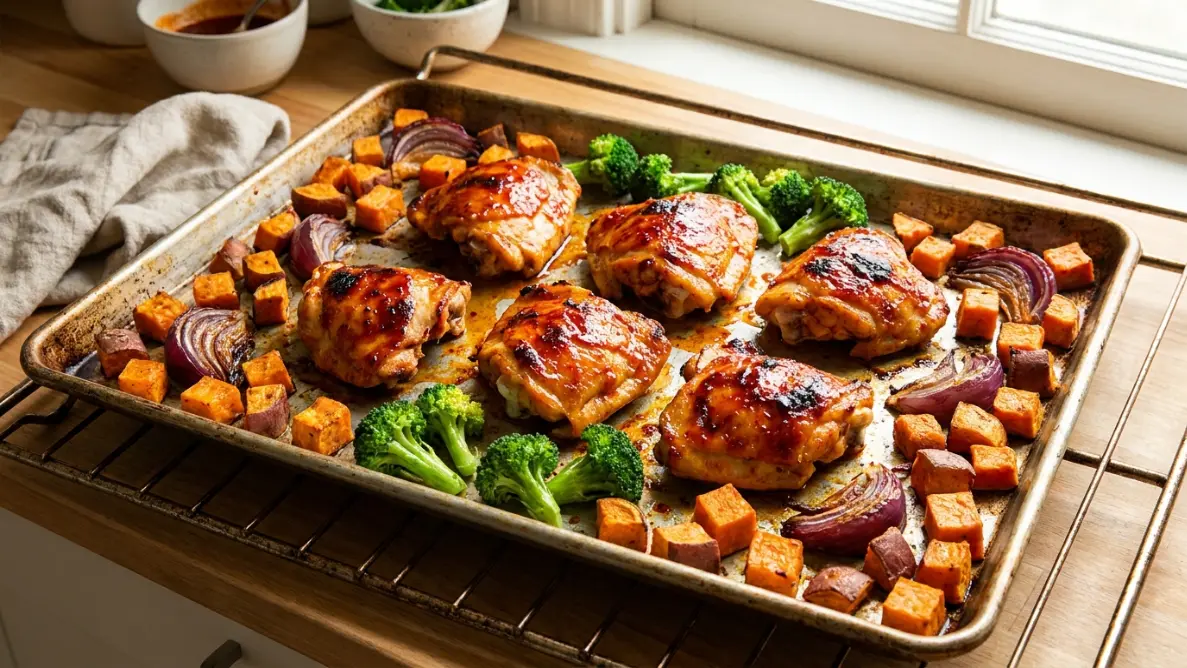
8. Rest 5 minutes. Let the chicken sit on the pan before serving. The juices redistribute, and the glaze firms up as it cools slightly.
Total active time is about 10 minutes of prep. The oven does the rest across roughly 40 minutes, including the staggered vegetable additions.
Getting Those Crispy Edges Without Burning
The title of this recipe makes a promise, so here’s how to actually deliver on it.
Gochujang glazes burn faster than you’d expect. That malty sweetness from the fermented rice goes from caramelized to carbonized in about 90 seconds under a broiler. The trick is to bake first, broil last. During the main bake at 425°F, the chicken cooks through and the initial thin layer of marinade sets into a tight skin. The second glaze — brushed on right before broiling — gives you fresh, sticky sugars that blister and crisp without having had time to dry out and scorch.
Three things prevent burning:
Dry your chicken before marinating. Excess moisture pools under the glaze and causes uneven browning — some spots char while others stay pale and soft.
Don’t overcrowd the pan. Each thigh needs airflow around it. If they’re touching, the sides steam instead of roasting, and you get rubbery skin where the thighs pressed together. Use a full half-sheet pan for 6 thighs, no exceptions.
Stay at the oven during the broil. Set a timer for 2 minutes and watch through the glass. The difference between crispy and burnt is about 60 seconds.
What to Serve With Gochujang Chicken
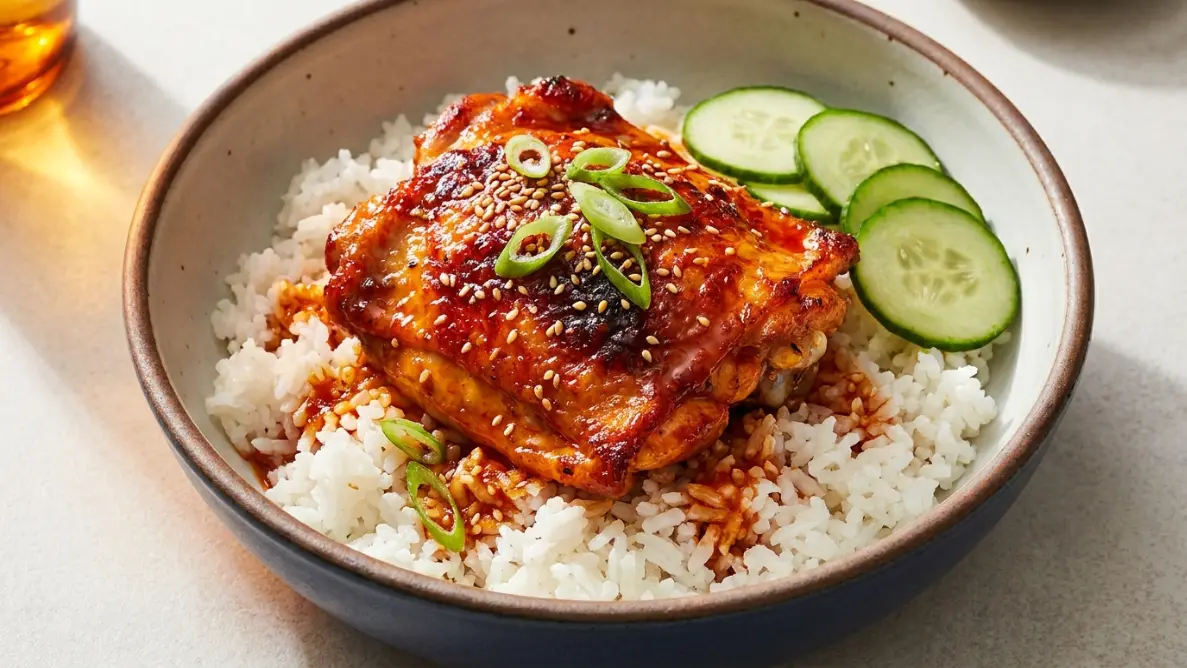
Plain white rice is the obvious partner, and for good reason — it absorbs the pan drippings. After you pull the chicken out, tilt the sheet pan and spoon the collected juices over your rice. That liquid is concentrated gochujang, rendered chicken fat, and caramelized vegetable sugars. Throwing it away is a waste.
Jasmine rice works if you want something slightly fragrant. Cauliflower rice works if you want something lighter.
For a side that cuts through the richness, make a quick cucumber salad: thinly sliced English cucumber tossed with rice vinegar, a pinch of sugar, sesame seeds, and a few drops of sesame oil. It takes two minutes and it resets your palate between bites.
Storage and Reheating
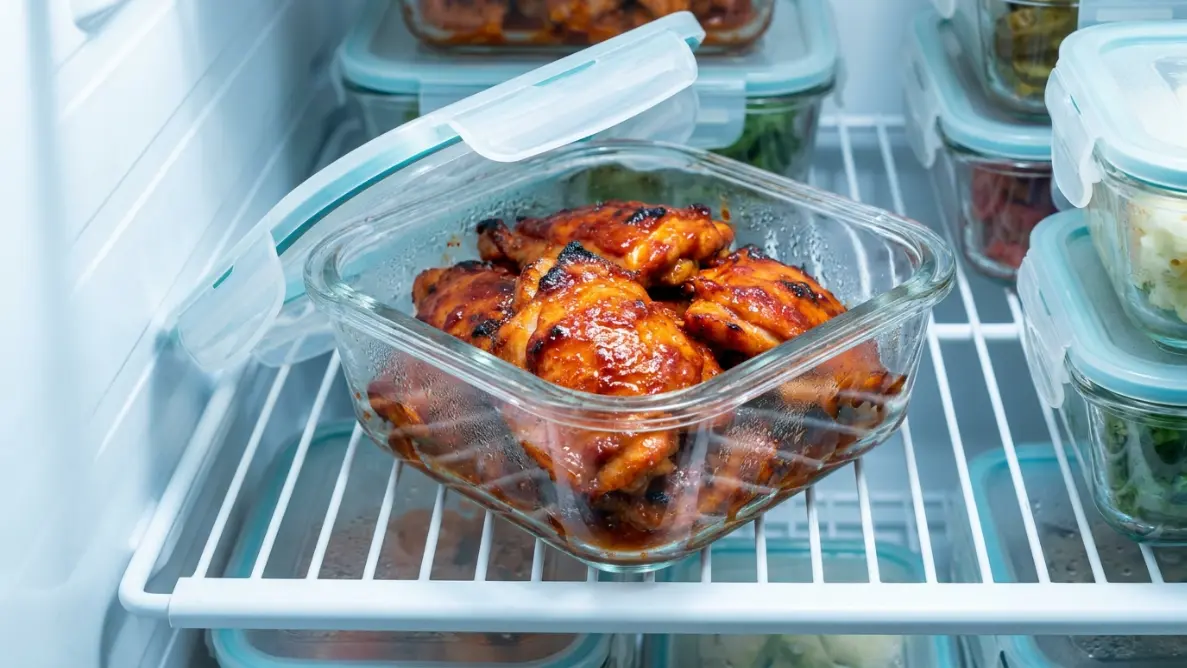
Divide the chicken and vegetables into shallow, covered containers and refrigerate them within 2 hours of cooking; do not wait for the entire pan to cool to room temperature. Store the vegetables separately when possible so they do not soften the chicken skin. For best texture, use the broccoli within about 2 days.
Chicken thighs keep well in the fridge for 3 to 4 days. To reheat, spread them on a sheet pan and warm at 375°F for 10 to 12 minutes. The oven brings back some of the crispness in the glaze. Microwaving works if you’re in a rush, but the skin turns soft and loses its texture.
For freezing, store the chicken alone (without vegetables) in a freezer-safe container for up to 2 months. Thaw overnight in the fridge before reheating.
Cooked chicken should reach an internal temperature of 165°F (74°C) before serving, and leftovers should be refrigerated within two hours of cooking, according to the USDA’s poultry safety guidelines.
Frequently Asked Questions
Can I use boneless chicken thighs instead?
Yes. Boneless thighs cook faster — reduce the main roasting time by about 8 minutes and skip the broil step, since boneless thighs dry out quickly under direct heat. The trade-off is less crispy skin and slightly less juicy meat, since the bone acts as an insulator during roasting.
How spicy is this recipe?
Moderate. Gochujang brings warmth that builds slowly rather than burning your mouth upfront. If your gochujang brand runs hot, reduce it to 2 tablespoons and increase the honey by 1 tablespoon.
What if I can’t find gochujang paste?
Check the international aisle at major grocery stores — most carry at least one brand now. Asian grocery stores almost always stock it, usually near the doenjang and ssamjang. If you absolutely can’t find it, a rough substitute is 1 tablespoon tomato paste plus 1 tablespoon sriracha plus 1 teaspoon miso paste plus 1 teaspoon sugar. It won’t taste the same — you’ll lose the fermented depth — but it gets you into the neighborhood.
Do I need to marinate overnight?
A brief 15- to 20-minute rest is enough for the glaze to cling and season the surface. If marinating longer, cover and refrigerate the chicken. Do not leave raw poultry at room temperature while marinating. An overnight marinade can deepen the flavor, but extended contact with the vinegar may soften the surface texture.
Can I use different vegetables?
Absolutely. The key is matching density to timing. Dense vegetables like carrots or potatoes go in with the sweet potato at the start. Tender vegetables like bell peppers, snap peas, or zucchini go in with the broccoli in the last 10 minutes.
Sheet Pan Gochujang Chicken Thighs With Crispy Edges
Ingredients
Method
- Whisk together the gochujang, honey, soy sauce, sesame oil, rice vinegar, garlic, and ginger. Before adding raw chicken, transfer 2 tablespoons of the mixture to a separate clean bowl for the final glaze.
- Pat the chicken dry, coat it with the remaining marinade, and let it stand while preparing the vegetables and preheating the oven, about 15 to 20 minutes.
- Preheat the oven to 425°F (220°C) with a rack in the upper third.
- Toss the sweet potato and red onion with olive oil, salt, and pepper. Spread them on a large rimmed sheet pan and roast for 12 to 15 minutes.
- Move the vegetables toward the edges and place the chicken skin-side up in the center, leaving space between the thighs. Roast for 15 minutes.
- Add the broccoli to the pan and roast for another 10 minutes.
- Brush the chicken with the reserved clean glaze. Broil for 2 to 3 minutes, watching constantly to prevent burning.
- Check the thickest part of each thigh with a food thermometer; it must reach at least 165°F (74°C). Rest for 5 minutes before serving.
Notes
Final Note
The glaze should look glossy and lightly blistered rather than black. Browning and clear juices are not reliable safety tests, so check the thickest part of each thigh with a food thermometer and confirm it has reached at least 165°F (74°C). Rest the chicken for 5 minutes before serving.
Leave a Reply